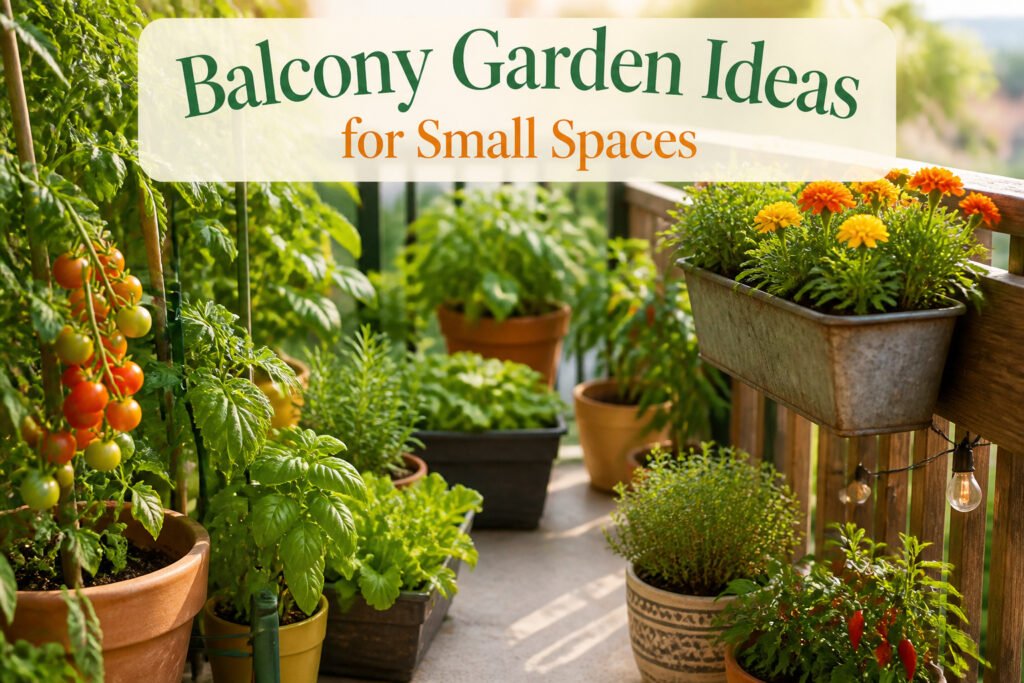
A balcony garden runs from a single railing box of lettuce to a potted Meyer lemon that needs two years before it fruits. The difference is not space, because every idea here fits the same 8 by 12 ft slab. What picks one for you is light: six hours of direct sun separates tomatoes and peppers from spinach and ferns, and no container depth fixes the wrong facing. I learned that after a cherry tomato stretched and yellowed for a full season on an east-facing ledge, never fruiting once.
1. Railing Planters

Railing planters clip onto the rail itself, which matters when your whole balcony is maybe 8–12 ft by 4–5 ft and floor space disappears fast. The boxes hang over the outside or sit on the inside ledge with brackets that adjust to your rail width. Lock them tight, because wind tests whatever you skip.
A 6-inch-deep box grows lettuce shoulder to shoulder, or French Petite Marigolds that stay under a foot and bloom from July to frost. Trailing nasturtiums spill the edge and handle poor soil; every flower is edible.
The catch is weight. Wet soil in a plastic or fiberglass box still adds up, and some buildings restrict what can hang from rails. Check with your landlord before you buy. A lightweight potting mix helps keep the load down, and railing boxes dry out first anyway, so water them before anything else on the balcony.
2. Vertical Gardens

Vertical gardening on a balcony starts with the one surface you usually have plenty of: the wall. Wall-mounted pocket systems, trellises, and modular planters all grow upward instead of outward, which frees the rail and floor space for furniture or walking room. I like pocket systems for this reason. They hang flat against the wall, hold shallow-rooted plants like lettuce, arugula, strawberries, and compact herbs, and leave the rest of the balcony alone.
Shallow pockets dry out fast, so the mix matters. Cut lightweight potting mix with extra perlite, never bagged topsoil. Arrange plants by thirst: put greens in lower rows where they catch drip-down, and drought-tolerant herbs like thyme up top. A south-facing wall that gets more than six hours of sun will crisp the top row without help; a $20 drip line on a cheap timer fixes that. Arugula pays off fastest: baby leaves in about three weeks from sowing.
3. Hanging Baskets
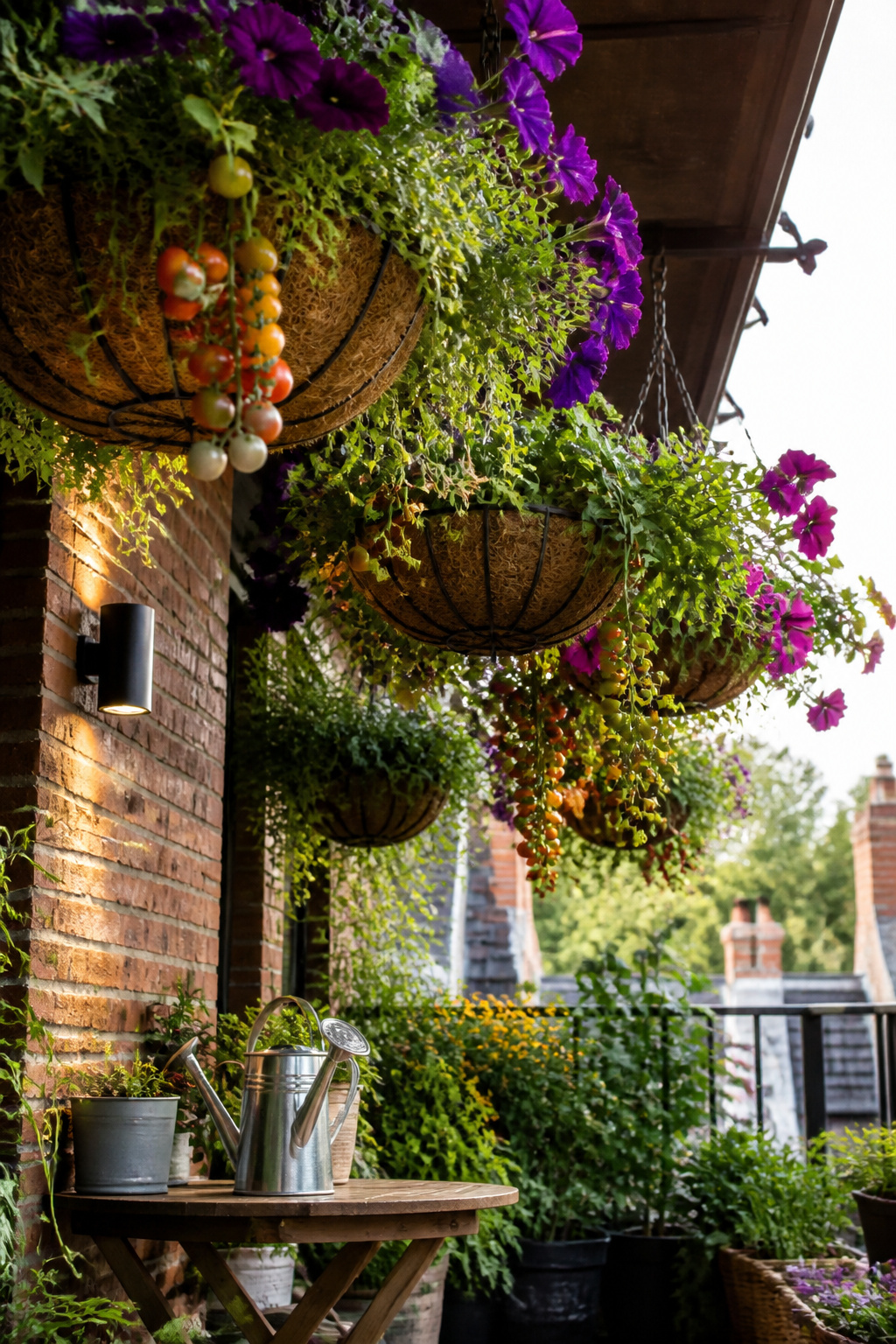
Overhead hooks add a whole planting layer without touching the floor, and a ceiling hook rated for the load is non-negotiable: a watered 12-inch basket runs 15 to 25 pounds. I cluster mine in groups of three rather than spacing them evenly, partly for the look and partly because clustered pots create their own wind barrier. On an exposed balcony, wind strips moisture fast, and unlined coco-fiber coir can dry out daily in summer gusts. Lining those baskets with a saucer or plastic liner punched with a few holes slows that down enough that I am not watering twice a day. I also run a second basket beneath the first where the structure allows it, since the lower basket catches most of the drips and watering both at once takes half the time. A quarter turn each week keeps growth even instead of lopsided. Trailing cherry tomatoes, strawberries out of reach of ground pests, and cascading petunias have all worked in that upper layer for me; oregano or trailing rosemary hung where you brush past and release the scent is the one I would add first if I were starting over.
4. Container Herb Gardens
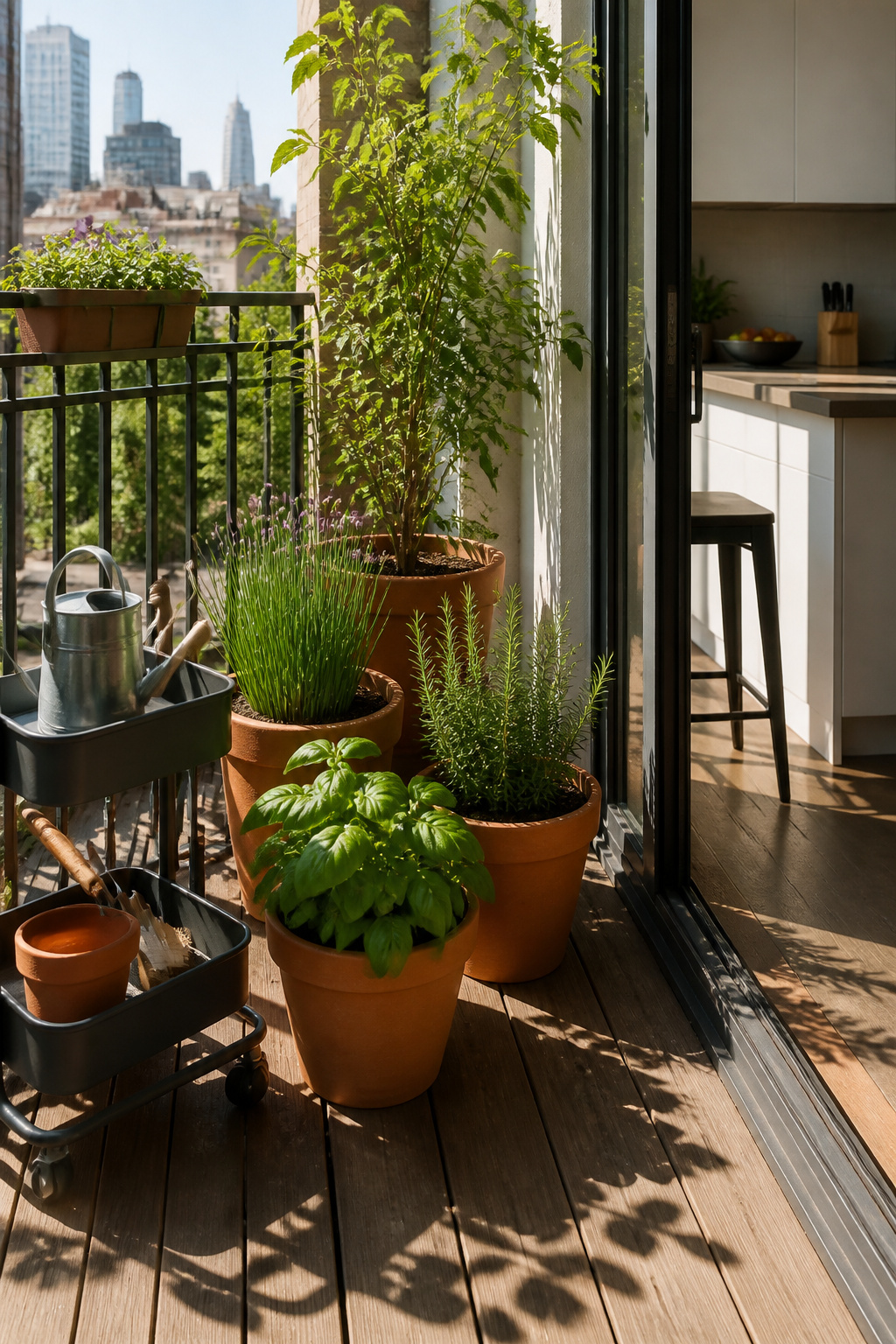
A cluster of small pots by the kitchen door is the balcony setup I reach for first. Six to eight inches of soil depth is the minimum most herbs need to root properly, though basil noticeably fills out more in a 10-inch pot. The real discipline is grouping by thirst: rosemary, thyme, oregano, and sage all prefer to dry between waterings and can share a wide bowl, while basil, cilantro, and parsley want steadier moisture and should stay in individual containers. Mint and oregano each demand their own pot regardless; they spread aggressively and will strangle anything else in reach. I water until it drains from the bottom, and in summer heat on an exposed balcony that can mean daily checks, sometimes twice in zones 7 through 9. The payoff is walking out to snip exactly what the recipe calls for, no plastic clamshell required.
5. Compact Vegetable Gardens

A tomato on a balcony needs 12 to 18 inches of depth and 6 to 8 hours of direct sun to produce fruit worth eating. Peppers run on the same specs. Without both, you are nursing a leafy ornament.
That sun number is the gatekeeper. I spent one season watching a cherry tomato stretch and yellow on an east-facing ledge before I admitted it was never going to fruit. Now I track light the simple way: on a clear day, I check where direct sun hits at 9 a.m., noon, and 4 p.m. Fruiting vegetables need six hours minimum, and those hours should be direct, not filtered through a neighbor’s awning. South-facing balconies usually qualify. North-facing ones rarely do, and no container depth compensates for the deficit. A jalapeño might survive on four hours, but surviving is not the same as producing.
Large containers also mean weight. A single pot holding that 18-inch depth can hit 50 to 100 pounds after watering. I keep mine against the building wall, over the structural support I assume is beneath the slab. Lightweight potting mix helps, but wet mix is still wet mix.
6. Living Privacy Screens

Close neighbors are the most common balcony complaint, and the cheapest fix is a fast annual vine on a trellis. Heavenly Blue morning glories read as a green wall in six to eight weeks if you nick the hard seed coat, soak the seeds overnight, and give them vertical strings or a railing trellis to run. They hit 10 feet or more in a season and flower from midsummer to frost.
For structure without a vine’s commitment, a long planter box of tall annuals does the same job. California Giant zinnias reach 3 to 4 feet in a deep box, screen a seated sightline, and hand you cut flowers all summer. Layer that tall box behind a mid-height herb row and the balcony reads enclosed without feeling boxed in.
Two cautions matter on a high floor. Anchor any trellis against wind as if a storm is guaranteed, because one is. And keep morning glory seeds away from kids and pets; they are toxic if eaten.
7. Tiered Planters

A three-tier metal stand on my balcony holds eighteen pots where bare concrete held six. Water drains from each shelf through mesh bottoms into the one below, so the lowest tray catches runoff that would otherwise stain the deck. I learned fast that the top shelf dries fastest and gets the most wind; basil and rosemary go there because they tolerate the stress. The middle tier, with steadier moisture and some shelter, handles parsley and chervil. Shade-tolerant plants like cilantro and tarragon sit on the bottom, where they still receive light but avoid the harshest afternoon sun.
Thirsty greens belong low, drought-tolerant herbs up top; the downward drip that keeps lower soil damp will rot a succulent or fry a shallow-rooted strawberry. Matching pot color matters more than matching plant: repeating terracotta or white across all three levels makes the stand read as one deliberate piece rather than a storage rack. Leave the back legs against the wall and angle the stand so every plant faces forward; nothing hides, and you water what you see.
8. Seasonal Rotation

A balcony in January does not have to look abandoned. Containers warm faster than ground soil in March and can tuck against the building wall when frost returns, which means the same pots can carry three distinct gardens in twelve months if you plan the swaps.
I run the rotation in three acts. March to May is cool-season: lettuce, spinach, arugula, and pansies that shrug off light frost go into the big containers. Once the last frost date passes, those same pots take warm-season tenants: tomatoes, peppers, basil, zinnias, morning glories. Then late August becomes decision month. Spinach and lettuce sown then give an October harvest, while tired pots get a few inches of fresh mix and balanced fertilizer before the next occupant moves in. September through November brings cool-season round two, plus Swiss Giant pansies that survive first frosts.
The two-minute reset between swaps matters more than the planting. Any pot that hosted disease gets its soil dumped entirely. The rest get topped up. Container soil is the one part of the system that wears out, and fresh mix is cheaper than replacing plants that failed in exhausted dirt.
Off-season storage is the part I underestimated. Empty pots left stacked on a small balcony collect water, crack in freeze-thaw cycles, and breed mosquitoes. A dozen five-gallon containers, nested and stored on their sides under a bench, take roughly the footprint of one chair. If space is tighter still, the soil can stay in place in the largest pots, covered with a tarp to keep it dry, while smaller containers come inside to a closet or under a bed. The stored soil will need refreshing come spring, but starting with something beats buying all new mix for a balcony that may only hold eight or ten pots total.
The cost stays manageable because the infrastructure, the pots themselves, does not change. A $500–800 annual garden budget absorbs the rotation through seed packets, a bag or two of potting mix, and replacement fertilizer rather than new hardware every season. The trick is accepting that some months the balcony looks sparse while seedlings harden off or beds rest. That pause is part of the system, not a failure of it.
9. Mini-Orchard
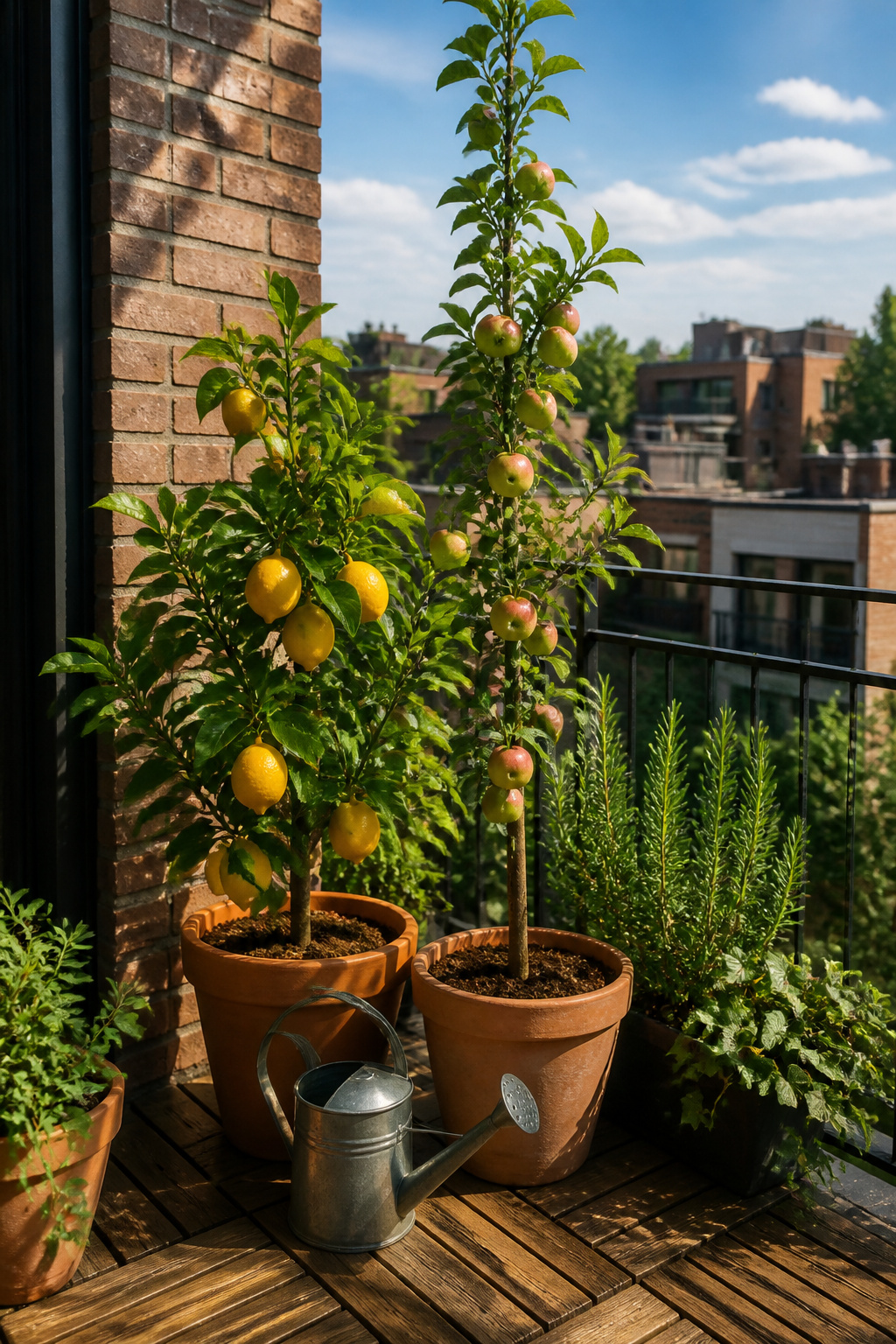
A balcony with six hours of direct sun can grow more than herbs and annuals. Dwarf Meyer lemon trees and columnar apple varieties are compact enough to live in floor pots without swallowing your floor space, and they give you fruit you actually planted yourself.
The catch is the wait. Meyer lemons often need two to three years before they set fruit worth picking, and even dwarf apple trees grown in containers may make you wait just as long for a real harvest. I have learned to treat the first seasons as growing years, not producing ones, and to choose pots I can still move when the tree is mature because I will be shifting it for winter protection if my balcony drops below its hardiness range.
Columnar apples stay narrow by habit, sending fruit on short spurs up a single central trunk, so a pot eighteen inches across can hold one without crowding your chair. The Meyer lemon wants a slightly wider root run and more consistent moisture, but both need the same thing you cannot fudge: that six-hour minimum of unshaded sun. Without it, you get leaves and patience without payoff.
10. Shade-Tolerant Gardens

A north-facing balcony blocked by neighboring buildings is not a dead end. It is a lettuce, mint, and fern balcony. Leafy greens like spinach and lettuce get by on 3 to 4 hours of direct sun and actually prefer some afternoon shade once summer heat arrives.
Hostas and ferns are the workhorses here. They thrive in containers with less than four hours of direct light, and their varied leaf shapes do the visual heavy lifting that flowers would on a sunnier spot. I cluster them at staggered heights to keep the eye moving, since flat rows of pots read as a green wall fast.
Edible options stretch beyond salad greens. Parsley and chives handle shade without complaint. Swiss chard, especially the heirloom varieties, gives you both color and harvest in the same footprint. What fails is trying to force fruiting crops into this light; tomatoes and peppers need six to eight hours and will sulk otherwise. Save those for a friend with a south-facing railing and take their ferns in trade.
11. Colorful Annuals and Perennials
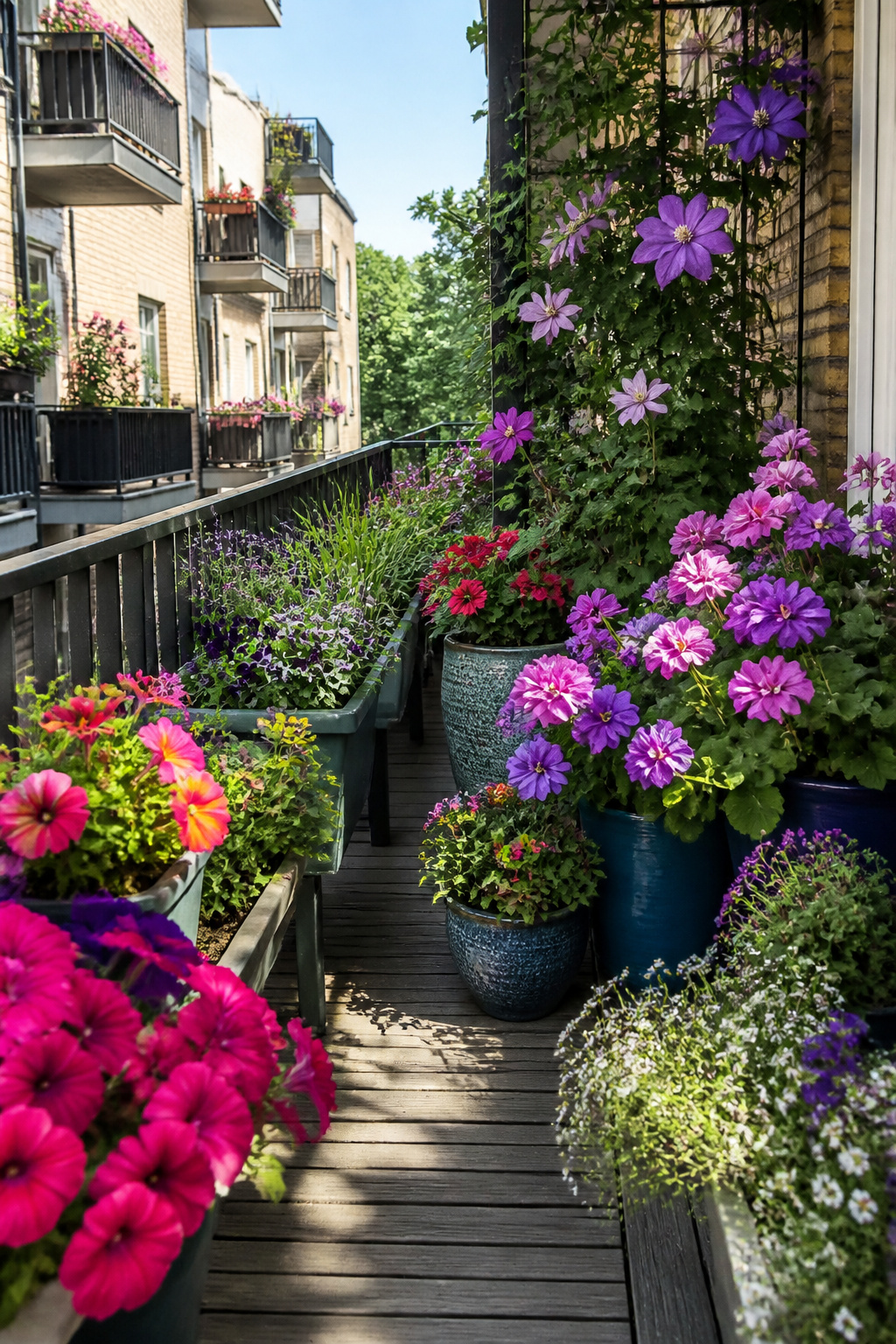
A mix of annuals and perennials keeps a balcony in bloom from spring through first frost without replanting everything each year. I learned this the hard way after filling twelve-inch pots with nothing but petunias one May and staring at bare soil by August.
Bees will find a balcony if the flowers are there. I had assumed the height would keep pollinators away until I watched a bumblebee work my railing boxes three stories up, moving from a purple trailing verbena to a compact ‘Rozanne’ hardy geranium. The annuals bring quick color; the perennials come back and often deepen their root systems enough to handle a missed watering.
Climbing clematis on a small trellis against the wall adds vertical flowers without floor space, and the bell-shaped blooms draw bees that then stay for the annuals. In part-shade spots, astilbe and bee balm keep the pollinator traffic moving even when the balcony faces north. I pair these with a few trailing annuals in hanging planters along the rail, so something is always open at a different height.
The mistake I keep making is underestimating how fast a three-gallon clematis fills its support. Give it a trellis rated for the mature size, or you will be untangling woody stems from your siding each spring.
12. Edible Flowers

Nasturtiums were the first edible flower I grew on a balcony, mostly because I kept seeing them listed as companion plants and got curious about the taste. The peppery bite of a fresh nasturtium leaf turned out to be sharper than arugula, and the flowers hold up surprisingly well in a salad or floated on a chilled soup. Violas are milder, more like a faint lettuce sweetness, and they recover faster from a morning harvest than nasturtiums do.
What sold me on keeping them in rotation was watching bees work the nasturtium blooms on a fourth-floor railing where nothing else I planted seemed to matter to pollinators. The flowers are annuals in practice, though nasturtiums will sometimes self-seed in a container if you let a few pods dry. Start them from seed directly in the pot; transplanted seedlings sulk for weeks and never catch up.
The overlap with herbs is real. Chive blossoms, borage, and arugula flowers all fit this same niche of looking good enough to plant for appearance alone while pulling double duty on the plate. A single 12-inch pot with nasturtiums trailing and violas filling the center gives cut-and-come-again flowers from late spring through first frost without demanding the sunny real estate that bush beans or cherry tomatoes require.
13. Decorative Containers

Ceramic pots were my first love for a balcony garden, and they still look better than anything else on a shelf. The problem is weight. A single 14-inch glazed planter filled with damp potting mix can push past fifty pounds, and most balconies have load limits that add up fast once you line the rail with three or four of them. Resin or fiberglass gives the same finished look at roughly a third of the heft, which matters when your building manager has never posted a number but you have seen the water stains on the ceiling below.
Fabric grow bags drop the weight even lower and fold flat by October, though they read more utilitarian than decorative. I would not use them for the pots at eye level where guests sit, but tucked behind a resin planter they handle the overflow tomatoes without straining the structure. The real non-negotiable is drainage. Decorative ceramic often ships without holes, or with one small puncture that clogs by July. Check the base before you buy, or keep a masonry bit on hand. Saucers underneath catch runoff and keep the downstairs neighbor from knocking, which in a rental is its own kind of structural integrity.
14. Windbreaks
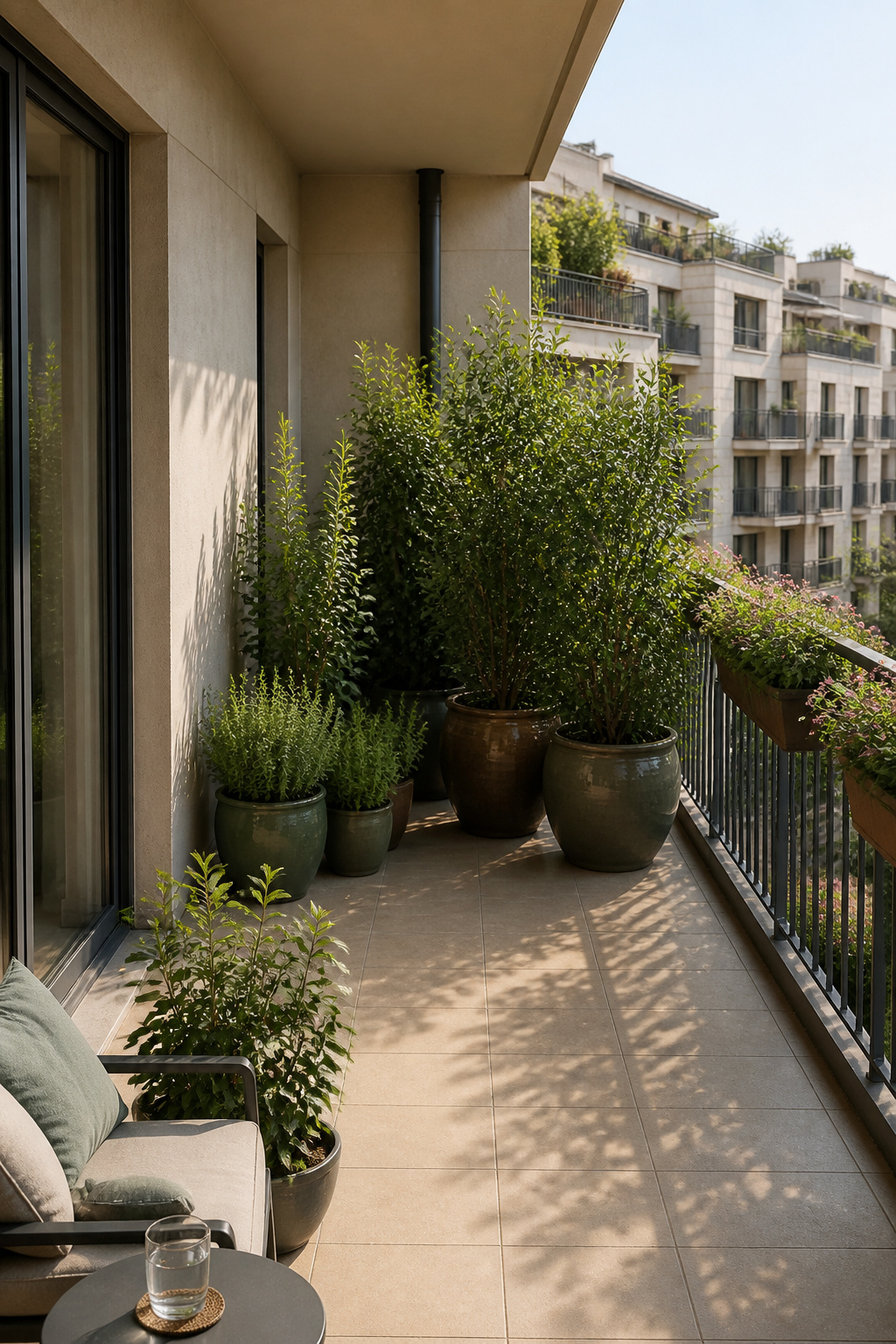
Wind pulls moisture out of balcony soil faster than heat alone, which is why the hanging baskets and lightweight potting mixes mentioned earlier dry to dust by afternoon on gusty days. Taller plants clustered on the windward edge of your railing or floor space act as a living screen, breaking the force before it reaches low growers like lettuce or herbs that bruise and desiccate in constant draft. A temporary screen of garden fabric or a slatted trellis does the same job if your plants are still small; position it to deflect gusts while leaving gaps for airflow, since still, stale air invites mildew. Sturdy, wide-based pots survive better here than tall, narrow ones that torque and topple. In severe weather, stakes or railing ties keep lightweight containers from sailing. The real test is summer in zones 7–9, where wind plus peak heat can demand twice-daily watering; a windbreak cuts that burden in half and gives roots a chance to drink before the next round of evaporation.
Sunlight Tracking

South-facing balconies usually collect the most direct sun, while north-facing ones stay shaded enough for mint and parsley to thrive. Before buying a single pot, spend one clear day tracking what actually hits your floor.
- Check your balcony’s direction with your phone’s compass. South faces get the longest exposure; east and west split morning and afternoon light.
- Note where direct sun lands at 9 a.m., noon, and 4 p.m. Mark the spots with tape or chalk. Nearby buildings and trees shift these patterns through the seasons, so repeat this in late spring when deciduous trees have leafed out.
- Categorize what you measured. Full sun means 6–8 hours of direct light, part sun 4–6, part shade 2–4, and full shade under 2. Fruiting crops like tomatoes need that top band; leafy greens manage 3–4 and prefer afternoon shade once July heat arrives.
- Match plants to the real numbers, not the wish. A north-facing space is not a failed garden; it is a lettuce, spinach, and fern garden.
Container and Soil Weights

A single 14-inch terracotta pot filled with wet garden soil can weigh 40 pounds or more, and three of them lined along a railing quickly become a structural problem. That is the math that turned me away from terracotta on my own balcony, despite how much better it insulates roots and resists tipping in wind. For anyone working with weight limits, plastic or resin containers cut the load by roughly half while still holding the same volume of plants. The tradeoff is faster drying and less winter protection, which is why slipping a plastic pot inside a terracotta sleeve works when the balcony can handle the combined weight.
The soil inside matters just as much as the pot. Garden soil is dense, compacts in containers, and holds water like a sponge. A bagged potting mix with perlite, vermiculite, or coconut coir drains properly and stays lighter even after watering. Some premium mixes also include slow-release fertilizer that feeds for three to six months, which saves a separate step.
Before buying anything oversized, a quick call to building management is worth the awkward conversation. Some properties have written weight limits or rules about what can hang from railings; others simply do not want water dripping onto balconies below. Knowing the constraints before the first trip to the nursery keeps the project from stalling after the first load of soil is already inside.
Watering in Dry Conditions

Container mix on a south-facing balcony can go from damp to dust in a single July afternoon. Last summer I missed two days during a heat wave and lost a dwarf tomato that had just started setting fruit. The containers themselves are the problem: their soil volume is small, the sides heat up, and wind across an elevated floor pulls moisture straight out of the leaves and the potting mix both. In zones 7 through 9, daily checks are not cautious; they are the minimum, and on the worst days you will water morning and evening both.
A lightweight watering can changes the math. Two gallons is enough for a dozen medium pots, and the plastic or collapsible models weigh almost nothing going up the stairs. I keep mine filled and waiting so the barrier to checking is as low as possible.
Self-watering pots with a reservoir below the soil line buy you a day, sometimes two. Drip lines fed from a bucket or a hose adapter run themselves if you are away for a weekend. Neither setup forgives a completely dry reservoir, though, so the habit of looking still matters more than the equipment you buy.
Pollinators on a Small Scale

Bees and butterflies will find a balcony if you give them a landing strip they can spot from below. Cluster flowers by color at the railing edge, where passing pollinators scan for signals. Blue and violet blooms read clearest; Heavenly Blue morning glories on a short trellis do double duty as a screen and a nectar bar, though you’ll want to nick and soak those hard seeds first if you start from scratch.
Annuals already in your rotation handle most of the work. Zinnias, especially the California Giant strains hitting 3 to 4 feet in a deep box, feed butterflies and give you cut flowers through summer. Tuck them behind lower pots so the tall blooms sit at eye level for you and at flight level for bees. Edible flowers tie in cleanly: borage and nasturtium both read as bright spots from a distance, and neither demands more than a standard container.
Placement matters more than variety. A single scattered pot reads as noise; four to six plants of the same flower massed in a 12-inch window box or rail planter registers as a target worth investigating. South-facing balconies catch the most pollinator traffic, but even a west-facing ledge works if the flower cluster sits at the outer edge where light lingers longest. Keep the box horizontal and low; vertical stacks look efficient to us, but a bee cruising at rail height will glide right past a tower with blooms stacked above its flight path.
DIY Planter Options

Anything that holds soil can become a planter, but not every container belongs in your balcony garden.
- Drill drainage holes in repurposed furniture before you fill it. A dresser drawer, wooden crate, or old chair seat rots fast without an exit for water, and roots suffocate in standing water.
- Old boots, teapots, and toy trucks work for annual flowers or single herbs, but their small volume dries out faster than large pots. Plan to water daily in summer.
- Skip the edibles in anything not food-safe. Galvanized metal can leach zinc, pressure-treated wood contains chemicals, and unknown plastics may release compounds when warm. Salad greens or tomatoes belong in containers sold for food use, or in plain terracotta, fabric grow bags, or untreated cedar.
- Fabric grow bags fold flat for storage and weigh almost nothing, which matters when a balcony has weight limits. Pair them with rolling caddies to keep them off the floor and prevent staining.
Frequently Asked Questions
What are the best plants for small balcony spaces with limited sunlight?
Hostas, ferns, leafy greens like spinach and lettuce, and herbs such as parsley and chives all thrive with under four hours of direct sun. Lettuce and spinach actually prefer some afternoon shade once summer heat arrives. Swiss chard and shade-tolerant flowers like violas add color and harvest without demanding bright light.
How do I know if my balcony gets enough light for vegetables and herbs?
Track where direct sun hits your floor at 9 a.m., noon, and 4 p.m. on a clear day, then categorize the total hours. Fruiting vegetables need six to eight hours of direct light; leafy greens manage three to four and prefer afternoon shade in July heat. South-facing balconies usually qualify for vegetables, while north-facing ones suit shade-tolerant plants instead.
What size containers should I use for different types of plants?
Herbs need six to eight inches of soil depth minimum, though basil fills out better in a ten-inch pot. Vegetables like tomatoes and peppers require twelve to eighteen inches of depth to produce worth eating. Railing planters can be as shallow as six inches for lettuce or compact flowers like French Petite Marigolds.
How often should I water container plants on a balcony?
Daily checks are the minimum in zones 7 through 9 during summer, and the worst days may need morning and evening watering both. Containers dry faster than ground plantings because wind and heat pull moisture from the small soil volume. Self-watering pots with reservoirs buy a day or two, but the habit of looking still matters more than the equipment.
What type of soil is best for balcony gardens?
A lightweight potting mix with perlite, vermiculite, or coconut coir drains properly and stays lighter even after watering. Never use bagged topsoil or garden soil, which compact in containers and hold water like a sponge. Some premium mixes include slow-release fertilizer that feeds for three to six months.