
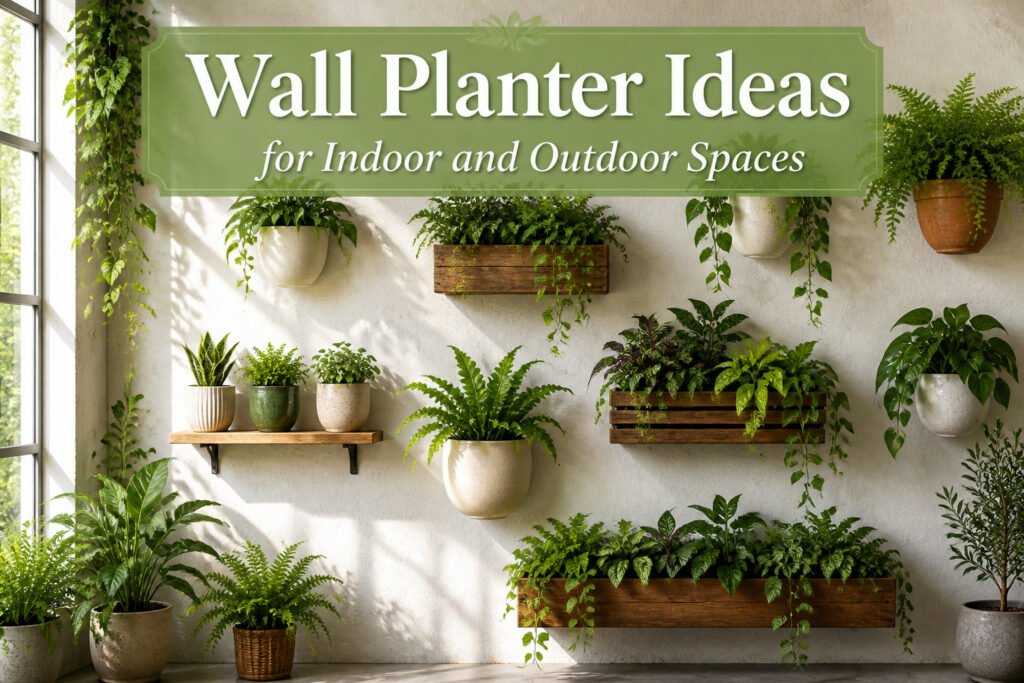
Wall planter ideas range from a single ceramic pot on a bracket to an 8-foot trellis for mature climbers, and the deciding factor is usually weight once soil is wet. A six-inch ceramic pot full of damp soil can hit eight pounds without looking heavy, and three across a shelf will pull drywall anchors free over a season if you sized for the dry load.
1. Wall Planters

The simplest wall planter ideas start with a pot mounted flat against the surface. Ceramic, metal, or plastic containers each carry different loads, so the bracket choice matters as much as the plant inside. Weight adds up fast once soil is wet, and a wall that flexes under pressure will crack plaster or pull screws free over a season.
The two-inch sizing rule keeps roots from circling without drowning them in unused soil: choose a wall planter two inches larger in diameter than the current nursery pot. Multiple drainage holes are non-negotiable. Water trapped against a painted exterior wall will blister paint and rot sheathing in two seasons; against interior drywall, the damage shows faster. Clay pots on a metal grid solve this by letting you lift each one out to drain in a sink before returning it dry.
Self-watering wall planters with a bottom reservoir cut the daily guessing for beginners who are still learning to read soil moisture. The reservoir meters water up as roots need it, which means a weekend away does not turn into a rescue mission. These suit renters and busy schedules better than hand-watering setups that demand a rhythm you have not found yet.
2. Plant Clips
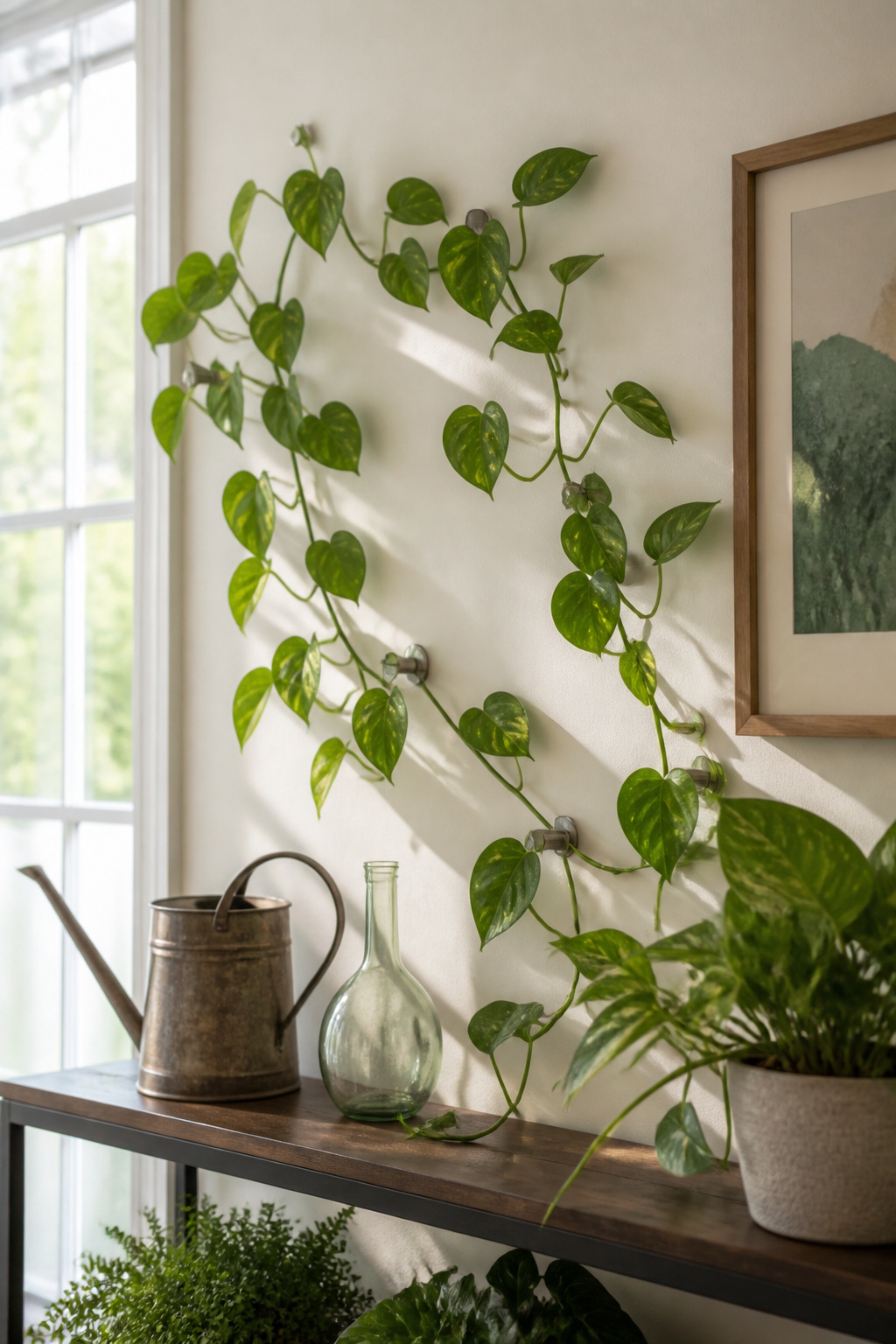
Bare walls become living ones with a set of small plastic or metal clips that pin a stem directly to the surface. Trailing pothos or ivy sends out runners that grip on their own over time, but the clips hold them in place while they learn the route. I have seen a friend’s bathroom wall turn into a green cascade this way for the cost of a takeout sandwich.
The clips work best on smooth paint, sealed wood, or tile, and they come off clean if the adhesive backing is the removable kind. Nailed versions hold heavier stems but leave marks you will need to fill later.
The mistake is overtightening. A clip squeezed too hard bruises the stem and blocks the flow of water and nutrients; the leaf above it yellows within a week and the whole runner dies back to that point. Leave the stem loose enough to shift slightly when you tug it with a fingertip. Check after the first watering cycle, since swelling tissue can tighten the grip on its own.
3. Propagation Tubes
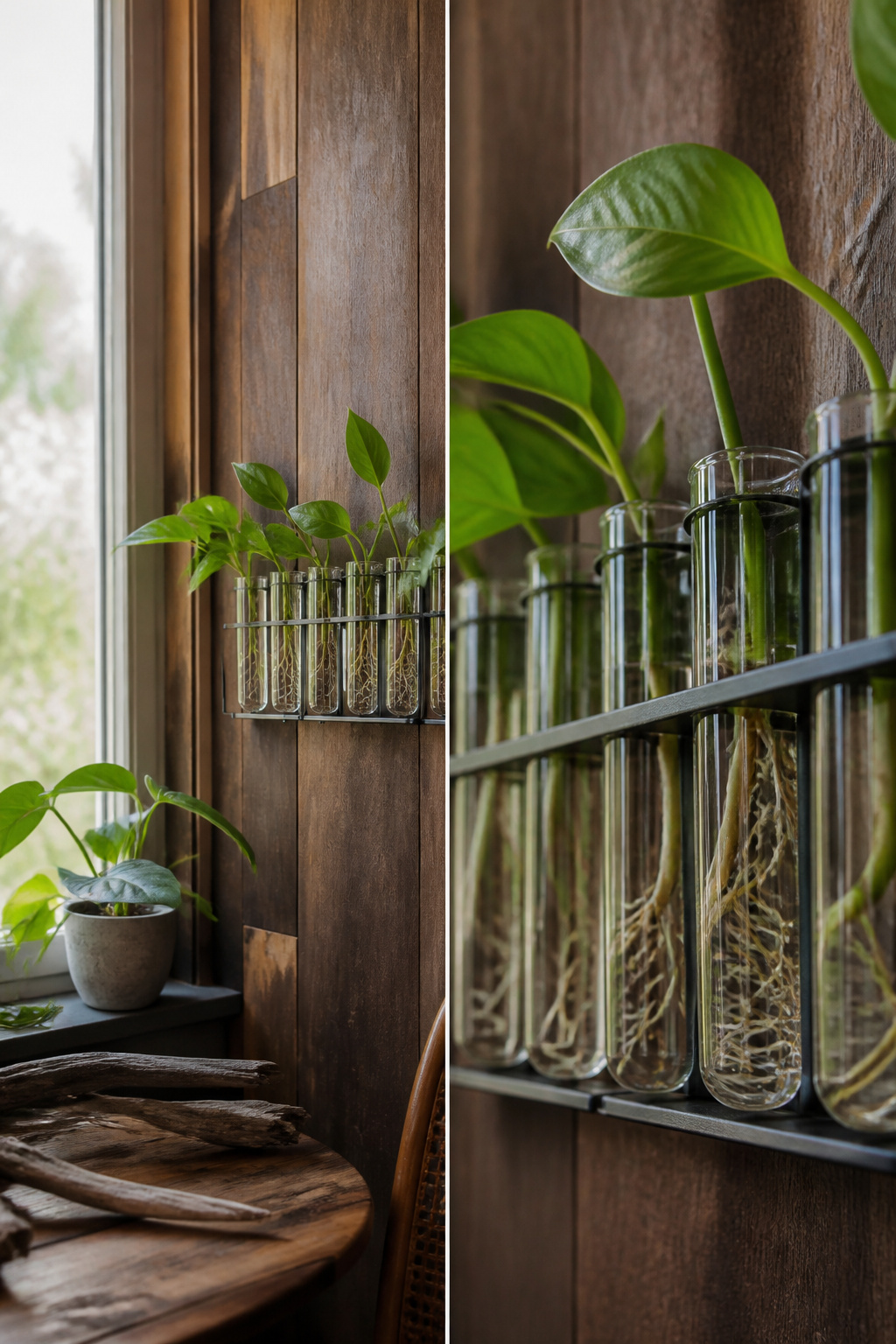
Glass propagation tubes turn a plain wall into a living display, especially once the white roots start threading through the water in shapes you never quite predict. Most setups use a wooden block or metal frame to hold five or six test-tube shapes in a row, mounted at eye level where the light hits.
The roots are the point, but they are also the maintenance. Change the water every five to seven days or it clouds, then stagnates, then rots the cutting at the base. Algae builds fast in south-facing spots, so keep the tubes out of direct sun if you want to stretch that to a week.
Pothos and philodendron root almost thoughtlessly in water. A node sitting below the surface will throw out growth within a couple of weeks in warm conditions. These tubes work as a holding stage, not a permanent home. Once the root mass fills the glass, the plant needs soil or leca and a real pot to keep growing. Leaving it too long starves it of nutrients the water cannot provide, and the roots tangle into a knot that tears when you try to transplant.
4. Shelves
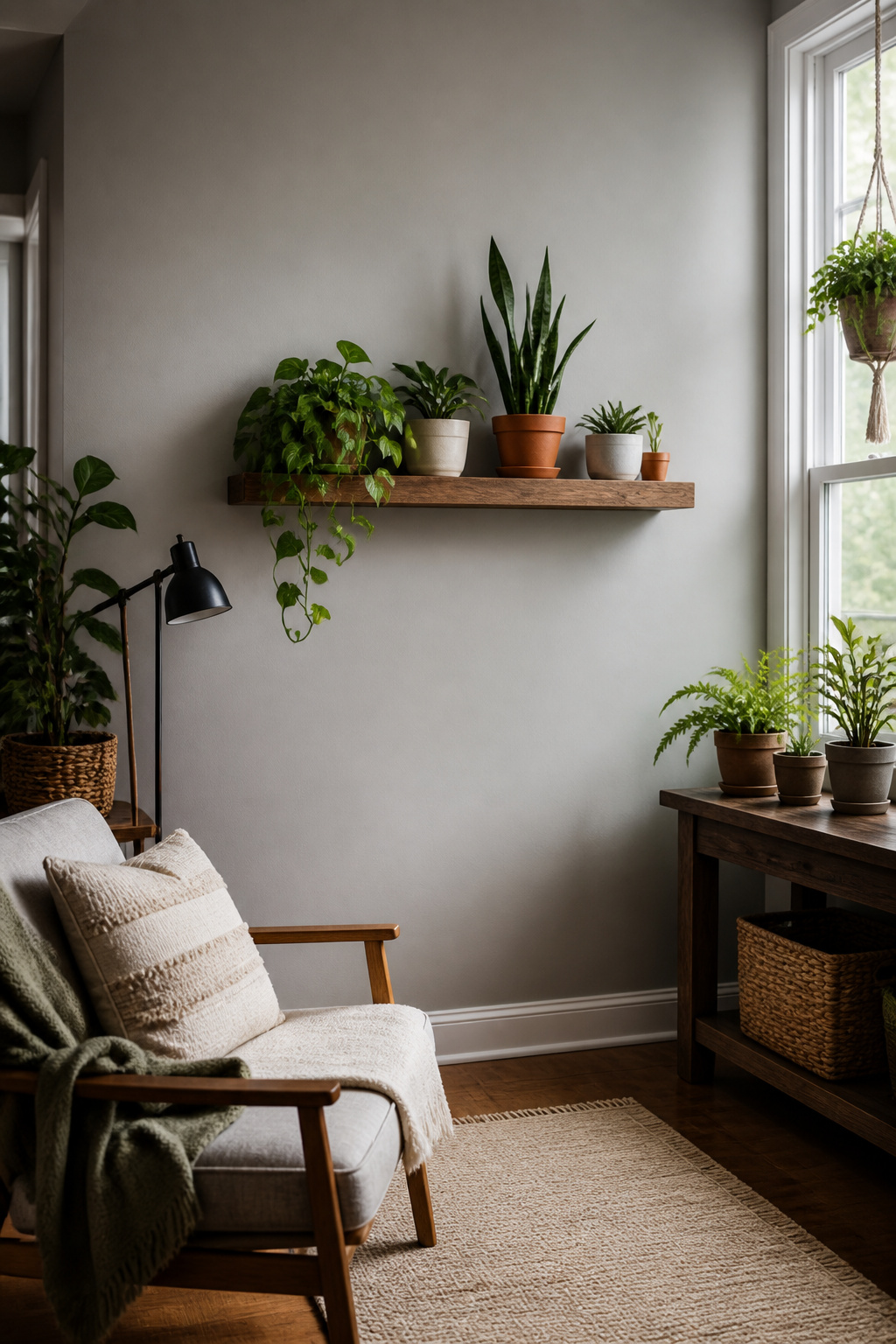
A plain wooden ledge screwed to the wall is the wall planter idea most people picture first, and it still works because the shelf itself does almost nothing. The plants do the visual work, and the shelf just holds them up where you can see them. What separates a useful one from a mistake is depth: four inches is the minimum before a pot starts tipping forward every time you water it or a breeze moves through.
Weight piles up faster than you expect. A six-inch ceramic pot full of damp soil can hit eight pounds without looking heavy, and three of them across a three-foot span is a lot to ask of a bracket from the hardware aisle. I have watched a reader’s shelf pull slowly away from drywall over a summer, not from one dramatic failure but from the daily inching of expansion and contraction. The wall won in the end, but the plants and soil did not survive the fall.
The real advantage of shelves over fixed wall planters is the mixing. A deep shelf lets you set a trailing pothos on the same level as a stiff snake plant in a heavier pot, then swap them out when the light changes or you get bored. Narrow shelves, the kind that look elegant in a photo, defeat this completely. You end up with one row of identical small pots and no room to step anything forward or back. The four-inch depth rule already pushes you toward six or eight inches if you want the arrangement to read as anything more than a line of green dots.
5. Plant Pockets
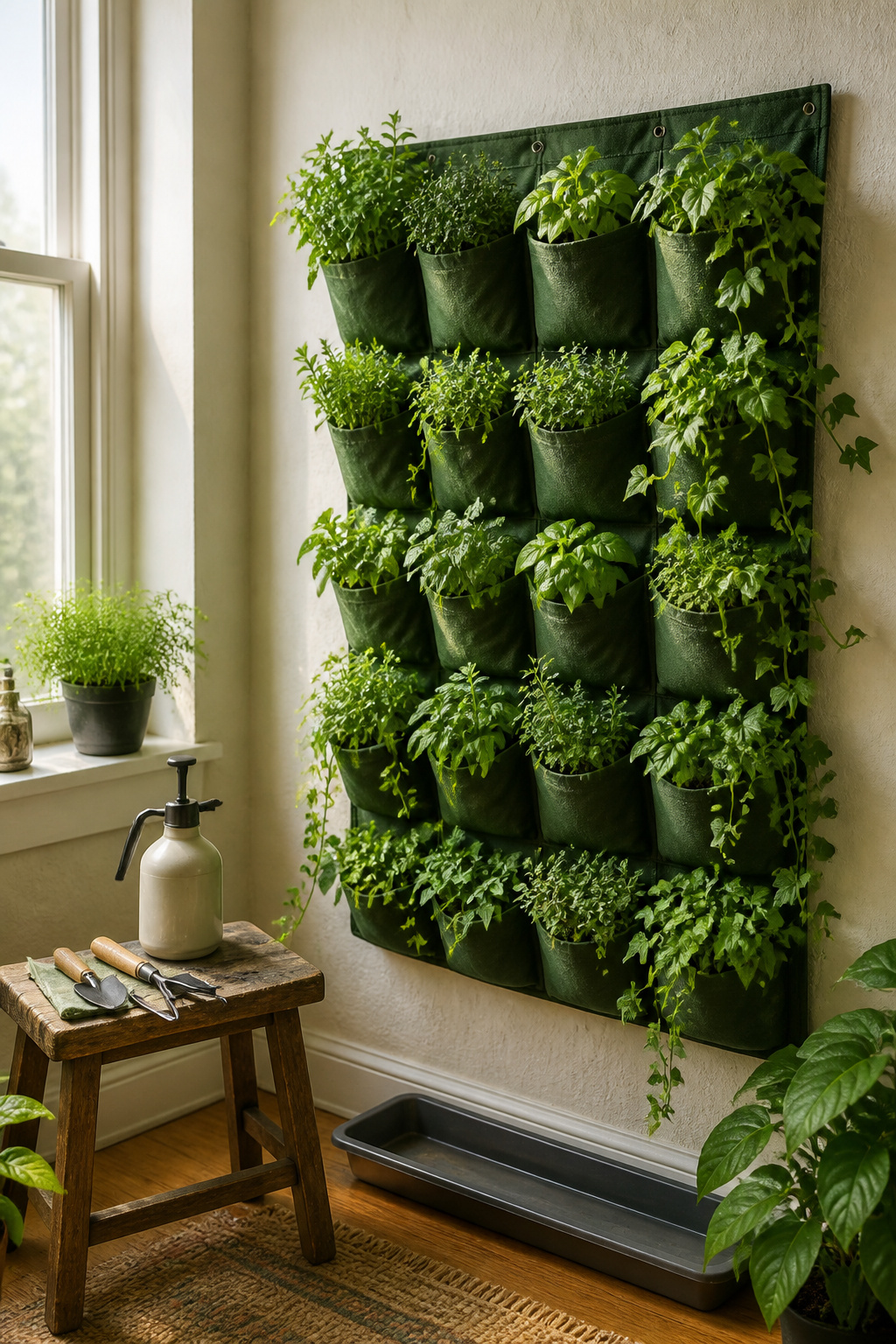
Fabric pockets breathe well and give roots something to grip, which is why succulents, small herbs, and ivy settle into them so readily. The felt or woven material wicks moisture outward in every direction, so the back panel will stain stucco or drywall within a season unless you mount a sheet of plastic or a shallow tray behind it. Watering is the real chore: on a warm July afternoon a pocket this size can go from damp to bone-dry in under 24 hours. Morning checks become non-negotiable, and a kitchen mister does not count as watering. The Spruce’s felt system works because it lets you pull out a struggling plant without dismantling the whole grid, which matters when one pocket gets too much sun and another stays shaded. Most individual pockets run $8–$12, though kits with a dozen slots bundled together drop the per-pocket price closer to $6. I would not try basil in a south-facing outdoor row unless someone is home daily to soak them; for that setup, echeveria or hens and chicks forgive the lapses.
6. Indoor Trellis
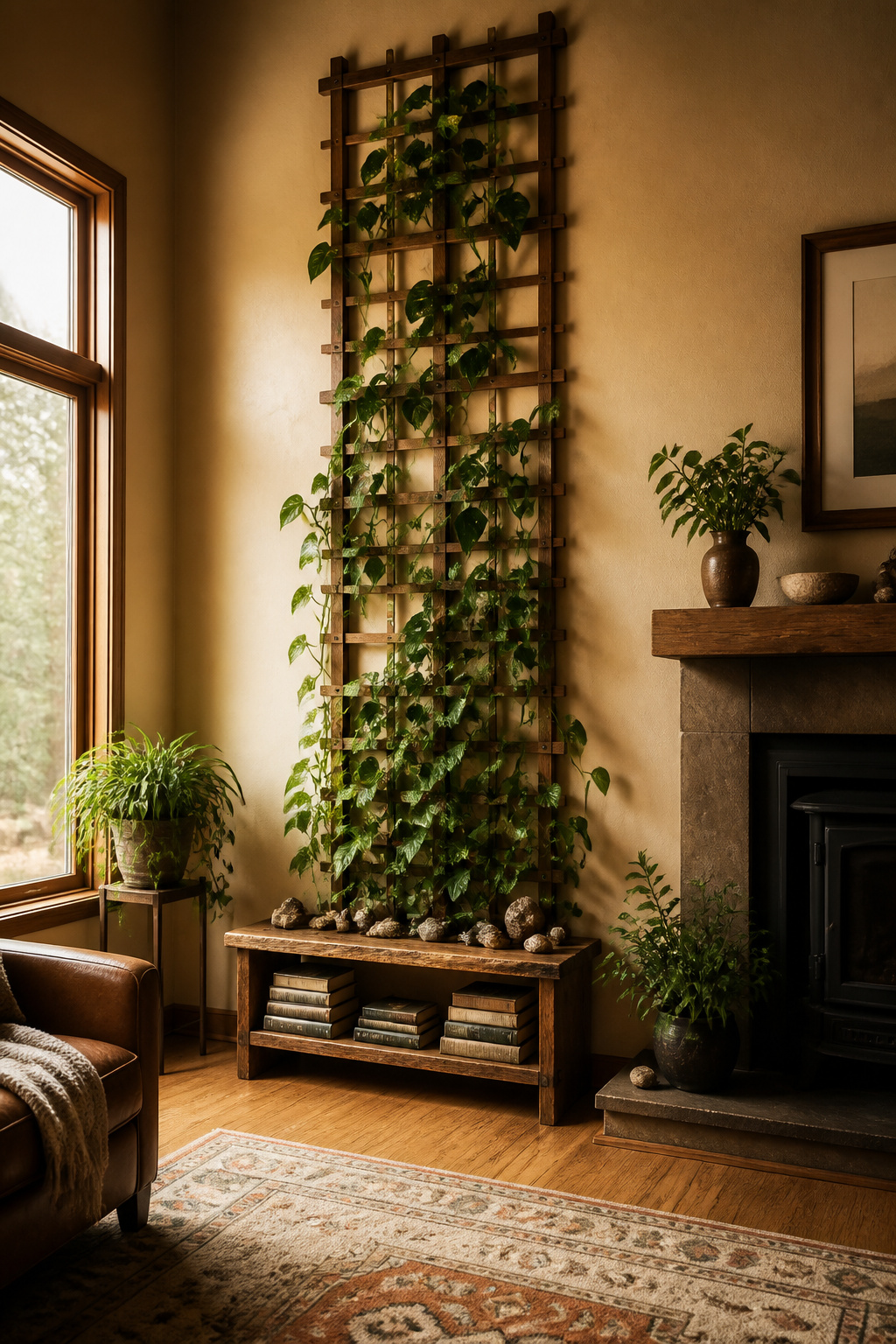
A wall-mounted grid gives a climbing houseplant something real to grip instead of adhesive hooks and hope. Wood frames warm a room but sag under wet weight; wire grids stay true and let tendrils thread through; bamboo splits if you torque it hard during install. Mount the frame with mature height in mind, not the six-inch pot you brought home. An 8-foot trellis for Rhaphidophora tetrasperma sounds excessive until year two, when the vine hits the top and keeps looking for ceiling.
Actual climbers like pothos send out aerial roots that grab and hold; plants that merely lean need tying in every few inches or they slide down and sulk. The first six months look sparse. The grid stares back at you, half bare, and you question the whole project. Then growth kicks in and the wall disappears behind leaf. That lag is normal, and rushing it with overwatering kills more indoor trellises than darkness does.
7. Window Plant Shelves
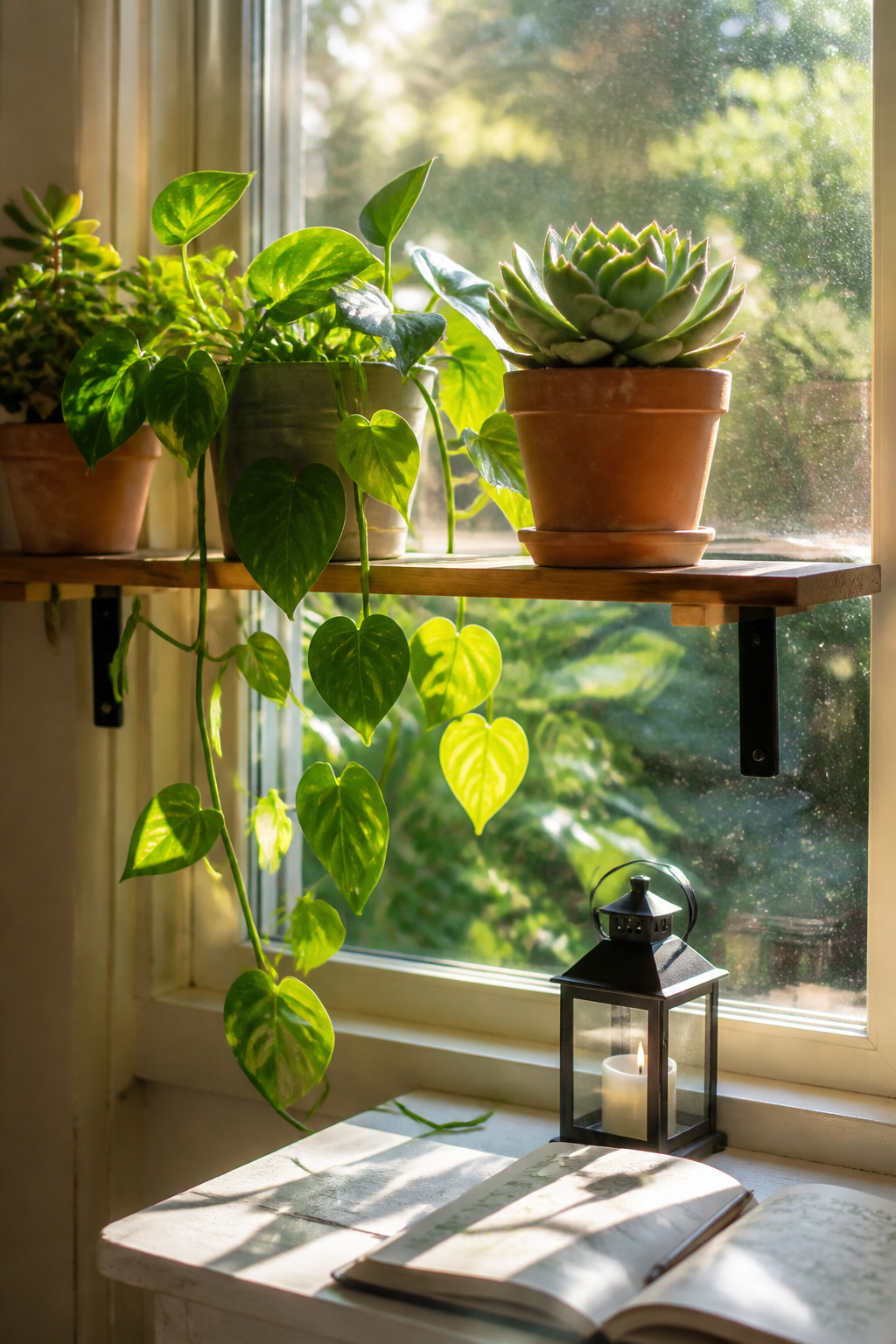
A window shelf turns the wall you already have, the glass itself, into a growing surface. The plants get what they need most: bright, indirect light for the tropical varieties most of us keep, and a full six hours or more of direct sun if the window faces south and you choose succulents or herbs.
Mounting runs two ways. Suction cups work for a single small shelf and a light load; a bracket screwed into the window frame handles more weight and more plants. Heat is the risk on south-facing glass. A shelf sitting in direct sun can climb well above room temperature, so a pothos or philodendron that tolerates bright light may still cook. I have learned to check the glass surface at midday before committing a plant to that spot.
"Living walls, also called vertical gardens, can be as simple as a set of shelves lined with houseplants, or as impressive as a vertical grid or frame bursting with greenery."
The simpler form, a shelf across the glass, is what most renters and newer gardeners actually build. One limit I did not consider until too late: do not block a window that serves as an emergency exit. Bedrooms require egress by code, and a shelf fixed across the lower sash turns a required escape route into an obstacle. Check which windows in your house must clear before you drill or stick anything in place.
8. DIY Wooden Ladder Planters
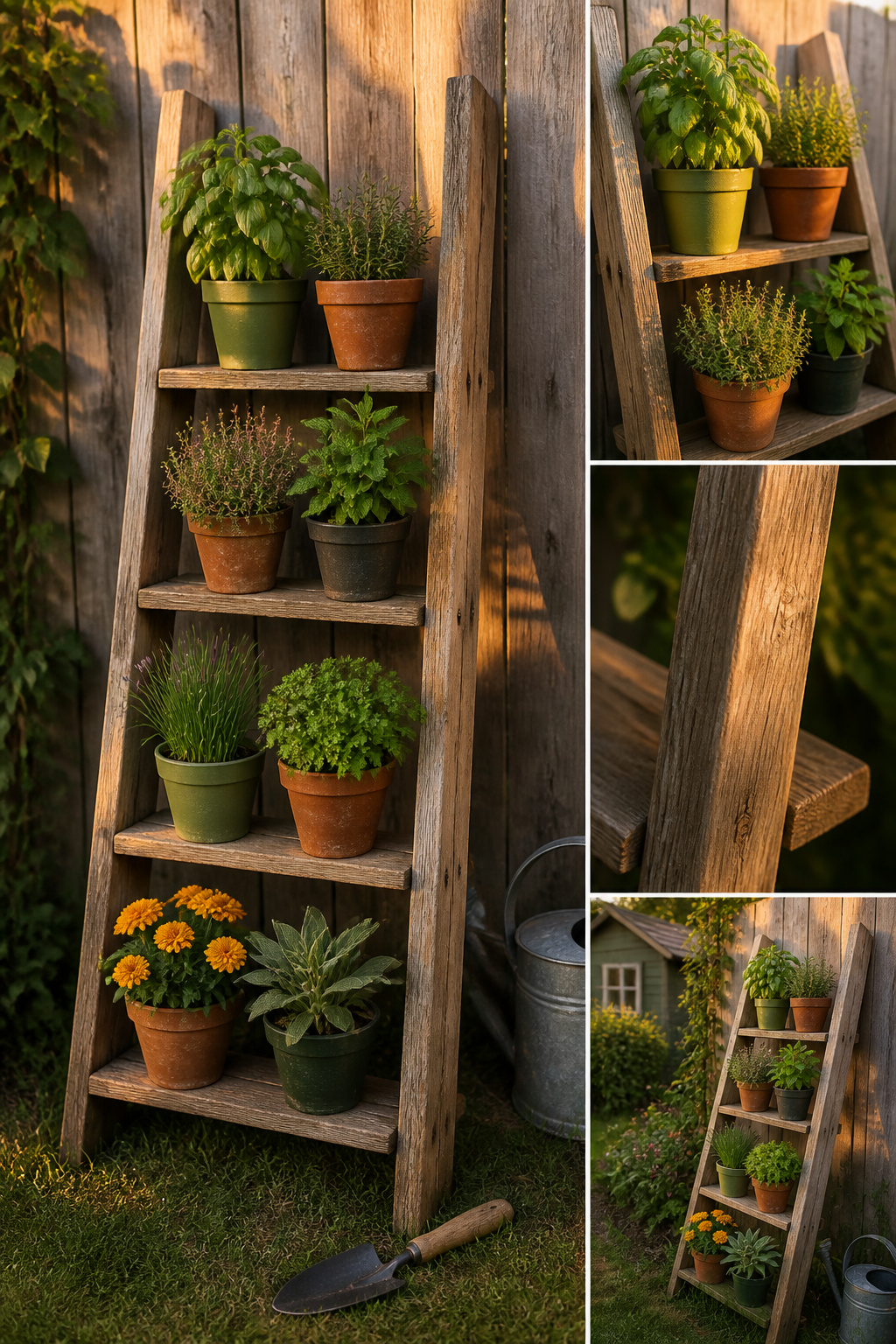
A wooden ladder leaned against a wall gives you five or six rungs of shelf space without a single drilled hole, which makes it one of the few vertical options that won’t cost a renter their security deposit. The ladder has to sit at an angle, roughly fifteen to twenty degrees back from vertical, or the whole thing goes over when you water. I learned that the hard way with a six-foot pine model on my first apartment patio.
For outdoor use, the wood needs real protection or it warps inside two seasons. A solid coat of exterior deck stain with a water sealer, reapplied yearly, buys you four or five years even in wet zones. Cedar holds up better than pine if you can source it, though it runs the build cost closer to sixty dollars than thirty.
A basic version takes an afternoon: sand the rungs smooth so pots sit flat, cut two side supports if you’re building from scratch, then stain and let dry overnight. The pots themselves rest on the rungs, so you can swap herbs for annuals without committing to permanent placement. That flexibility matters more than it sounds when you’re figuring out what actually grows on your particular wall.
9. Staggered Succulent Wall Boxes
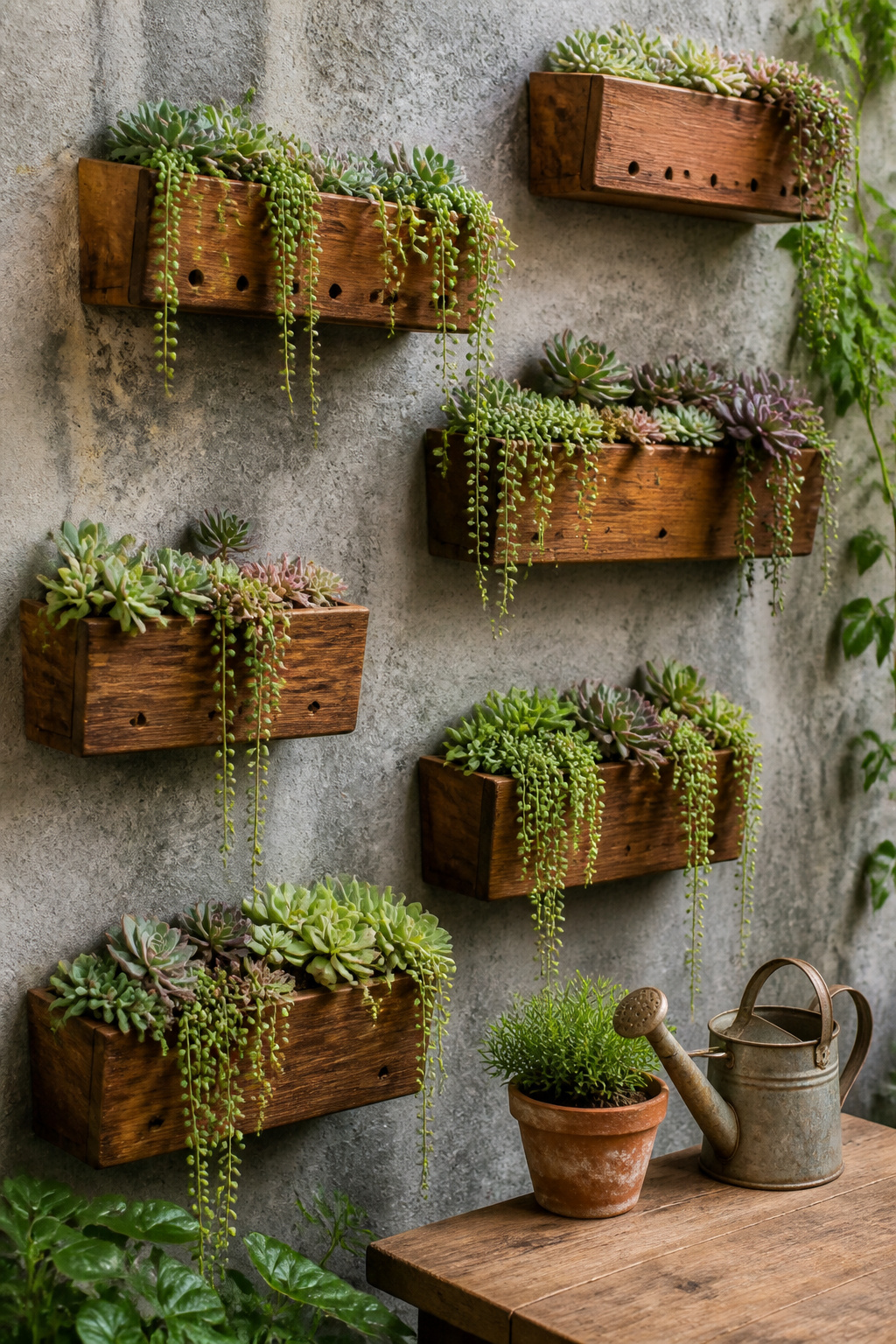
Shallow boxes mounted at uneven heights turn a flat wall into something that moves. Two to three inches of soil is enough for most succulents; their roots spread wide rather than deep, and packing them in tighter only invites rot. Drainage holes are the detail that decides whether this lives or dies, because succulents sitting in wet soil will soften and collapse faster than almost any other plant.
The staggered spacing matters for the eye as much as the plants. Aligned boxes read like storage; offset ones read like art. String-of-pearls or burro’s tail draping between tiers breaks up the geometry and gives the wall actual rhythm.
Weight sneaks up on you. Dry soil is lighter than you expect, soaked soil is heavier, and a fully planted box can pull a mount clean out of weak drywall. Plan for the wet weight, not the empty box.
Humid climates without steady airflow are where this setup fails. Succulents evolved for dry air; trapped moisture against a wall in summer heat breeds fungus and root rot. If your patio sits still and muggy, this is probably not the planter for you.
10. Macramé Wall Plant Hangers
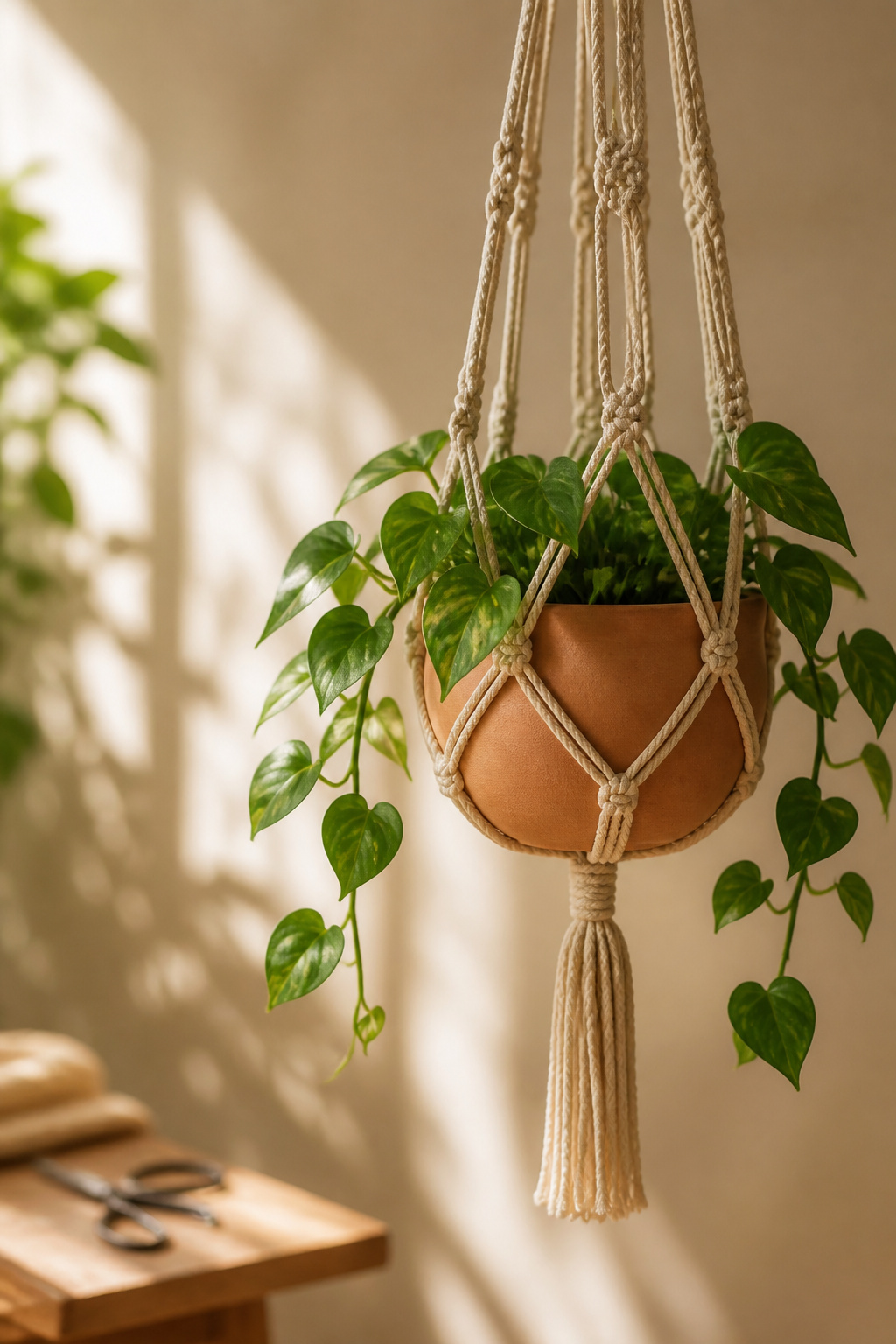
Macramé wall hangers came back hard in the mid-2010s after forty years of looking dated, and the current versions are sturdier than the 1970s originals because makers stopped treating them as pure decoration. A potting-soaked planter in 3 mm cotton cord can run 15–20 pounds, so the hanger matters less than the hook behind it. Wall hooks need to bite into a stud or a toggle anchor rated for at least twice the loaded weight; drywall alone pulls out slowly, then all at once.
Round pots with a slight lip at the rim sit most securely in the cradle of knots, while tapered cylinders tend to torque and tip when bumped. I would skip anything with a drainage saucer attached; the hanger holds the pot body, and a saucer catches on the fringe or dumps its cache of water down the wall. The rule of thumb for sizing up holds here too: a pot two inches larger than the nursery container gives the plant room without overloading the cord or the hook.
11. Farmhouse Porch Swing Setups
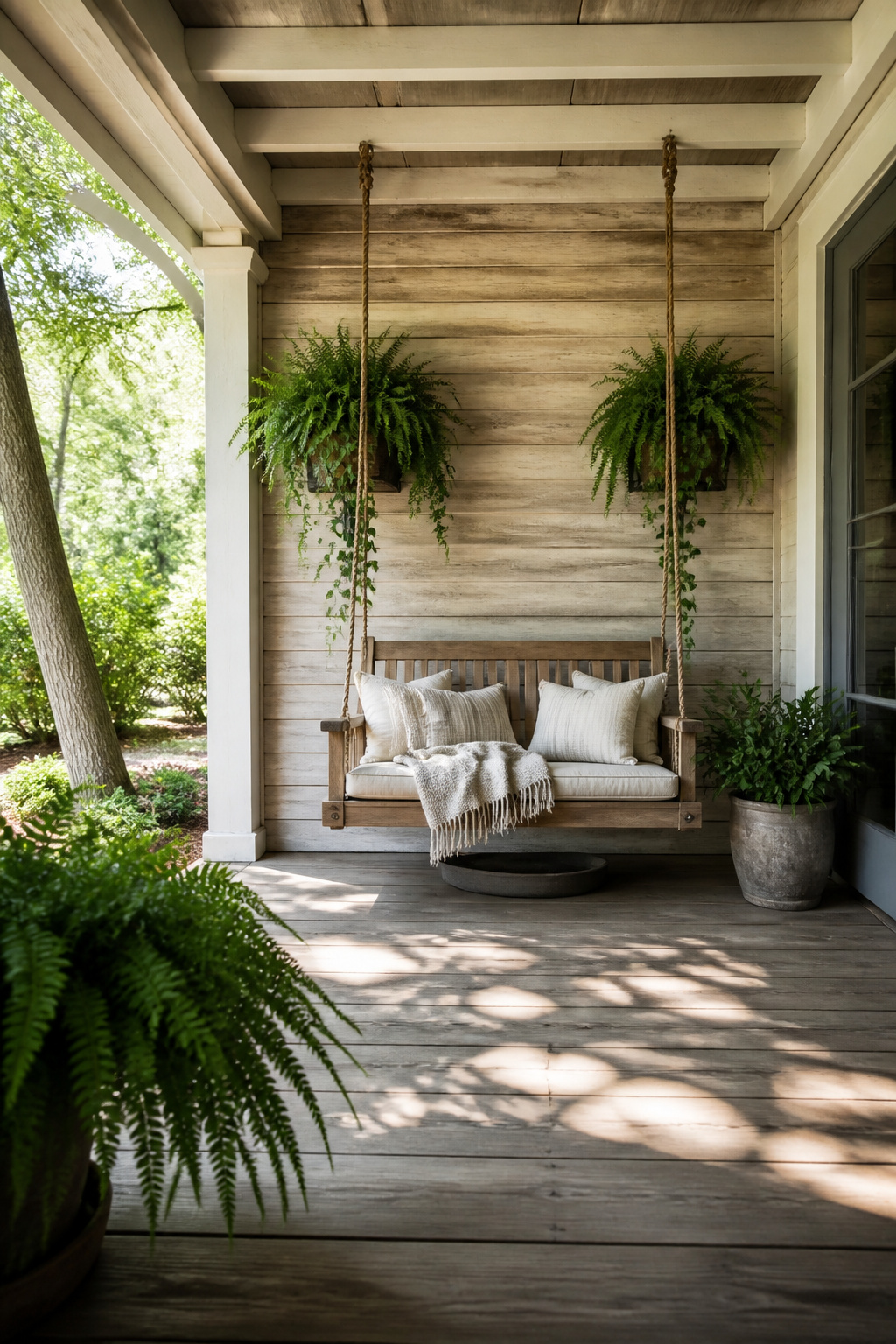
A porch swing needs breathing room overhead, and that is exactly where wall planters hung just beyond arm’s reach fill the gap without stealing the seat’s clearance. The trick is keeping trailing stems above head height so a gust of wind does not drop wet leaves onto whoever is rocking. I have seen setups where short brackets mount ferns or ivy a foot or two past the swing’s arc, close enough to read as one vignette but far enough that the chains never graze foliage.
The hardware matters more here than with a static chair. Every push changes the sight lines, so a planter that looks balanced at rest can read as lopsided mid-swing. Rigid metal or powder-coated steel holds up better than wood against the moisture a swing stirs up from below, and it will not split where the bolts take the weight.
What nobody tells you is how much a swing complicates watering. You cannot step back to spray without the seat knocking your elbow, and drips that would dry on open decking pool where the chains meet the joists. A narrow drip tray or a self-watering reservoir buys you slack, but the real fix is choosing plants that forgive a missed drink. Succulents or pothos in a shaded porch spot handle neglect better than ferns, and they do not shed enough to clog the hardware.
12. Industrial Shelf Plant Walls
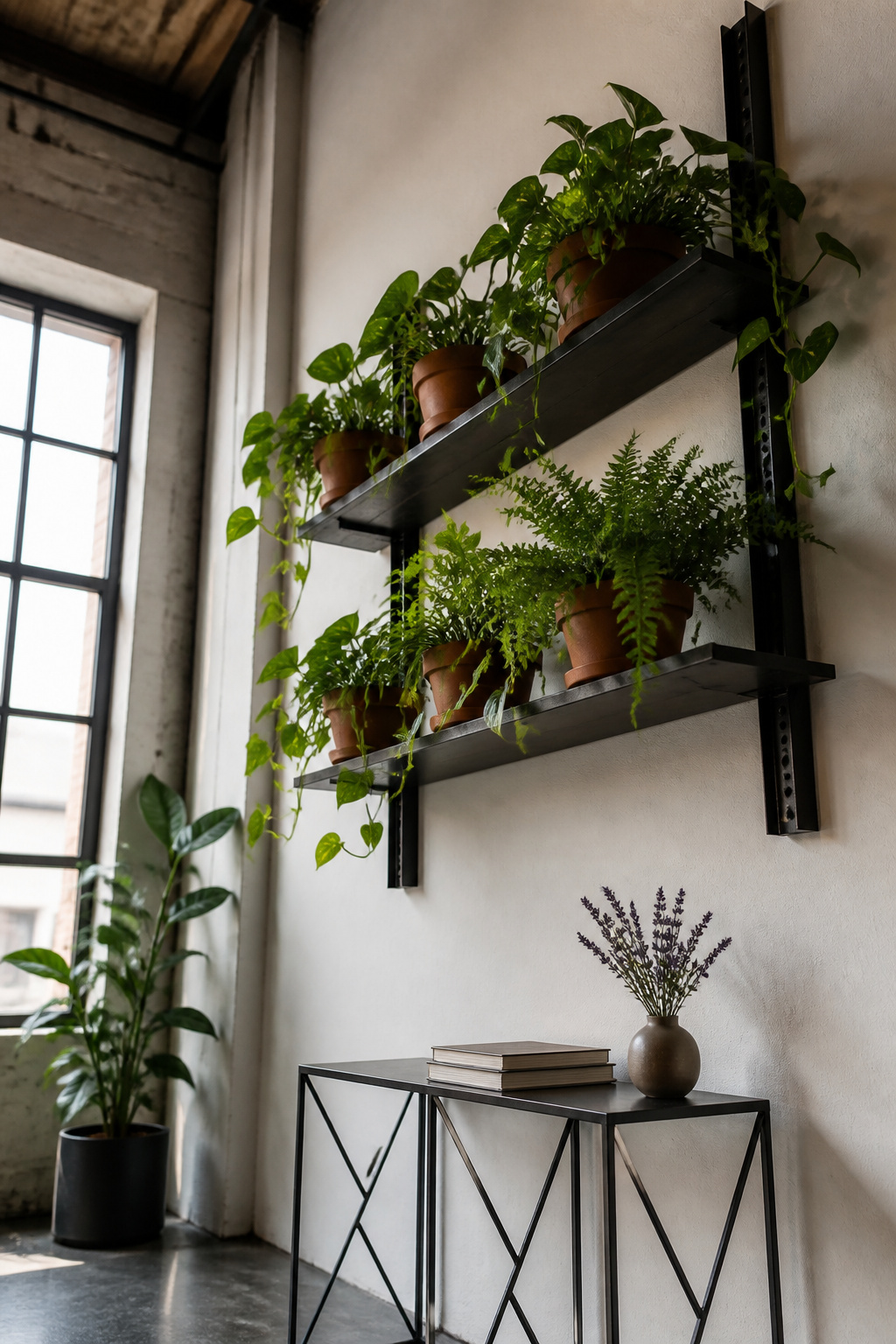
Black steel uprights bolted to a white wall, supporting raw wood shelves lined with terracotta pots, is the industrial look in a single image. The hard frame against soft plants is the point, though the mismatch can cut both ways. Delicate ferns or trailing ivy sometimes look stranded against that metal, while jade plants or a thick-leafed pothos hold their own.
The real work is in the mounting. A full shelf of soil and mature plants adds weight fast, and a lighter planter helps but does not solve the problem. Pipe flanges need to hit actual studs, not drywall anchors, and even then, checking the combined load against the flange rating is worth the ten minutes. Rust prevention matters on anything steel going outdoors; a wire brush and rust-inhibiting primer before assembly buys years.
Sourcing splits cleanly. Big-box hardware stores carry standard black pipe and flanges in one trip, enough for a two-shelf unit running roughly $80–120 in fittings. Specialty retailers sell cleaner finishes and pre-cut uprights, usually at double that or more. For a first build, the hardware-store route lets you adjust spacing after you see how the plants fill in.
13. Circle Wall Planter Displays

Round planters arranged in repeating circles read as geometric wall art from a few feet back, but up close the planting reality is messier. The soil depth varies around any ring, shallowest at the inner curve and deepest at the outer, so a single species with uniform root needs rarely fills the whole planter evenly. I have seen people solve this by pairing shallow-rooted sedums on the inside with deeper-rooted creeping thyme trailing over the outer edge, letting the mismatch become the design.
Drainage in curved bases needs attention because water wants to pool at the lowest point of the arc, yet most circular wall planters sit with that low spot off-center from how they hang. A drainage hole drilled at the true bottom of each ring, not where the mounting bracket happens to land, keeps roots from rotting after heavy rain. Repeating circles at different scales, one large ring framing two smaller ones, works best when the spacing between them is tighter than the ring thickness itself; otherwise the wall starts reading as polka dots rather than composition.
The real headache comes with repotting. A circular opening gives you no corner to lever a root ball against, and the soil tends to compact into a solid plug that spins rather than lifts. I narrow my plant choices to things that can be divided in place or simply refreshed with a top dressing of compost, avoiding anything that outgrows its ring in a single season.
14. Faux Plant Walls

Silk leaves catch light the way plastic never manages, though that gap narrows each year as the mid-grade polyethylene gets molded finer. The real divide is what happens after six months outdoors. UV breaks down cheap plastic fast enough that you will notice color shift by the second summer; silk fades slower but the fabric backing can crack. Preserved moss sidesteps both problems, giving actual plant texture with no watering, though it darkens over time rather than staying that spring green.
Dust is the maintenance nobody advertises. Static-cling buildup on leaves means a hairdryer on cool, held at arm’s length, or a soft brush monthly; skip it and the wall reads as neglected, not lush. For spaces with zero window light or for caretakers who travel two weeks at a stretch, the tradeoff makes sense. Preserved moss holds up longest in dim corners, while silk works better where you want shape and leaf variety. Plastic only wins on price, and the gap is not wide enough anymore to justify the replacement cycle.
What to Plant in Each Light Condition
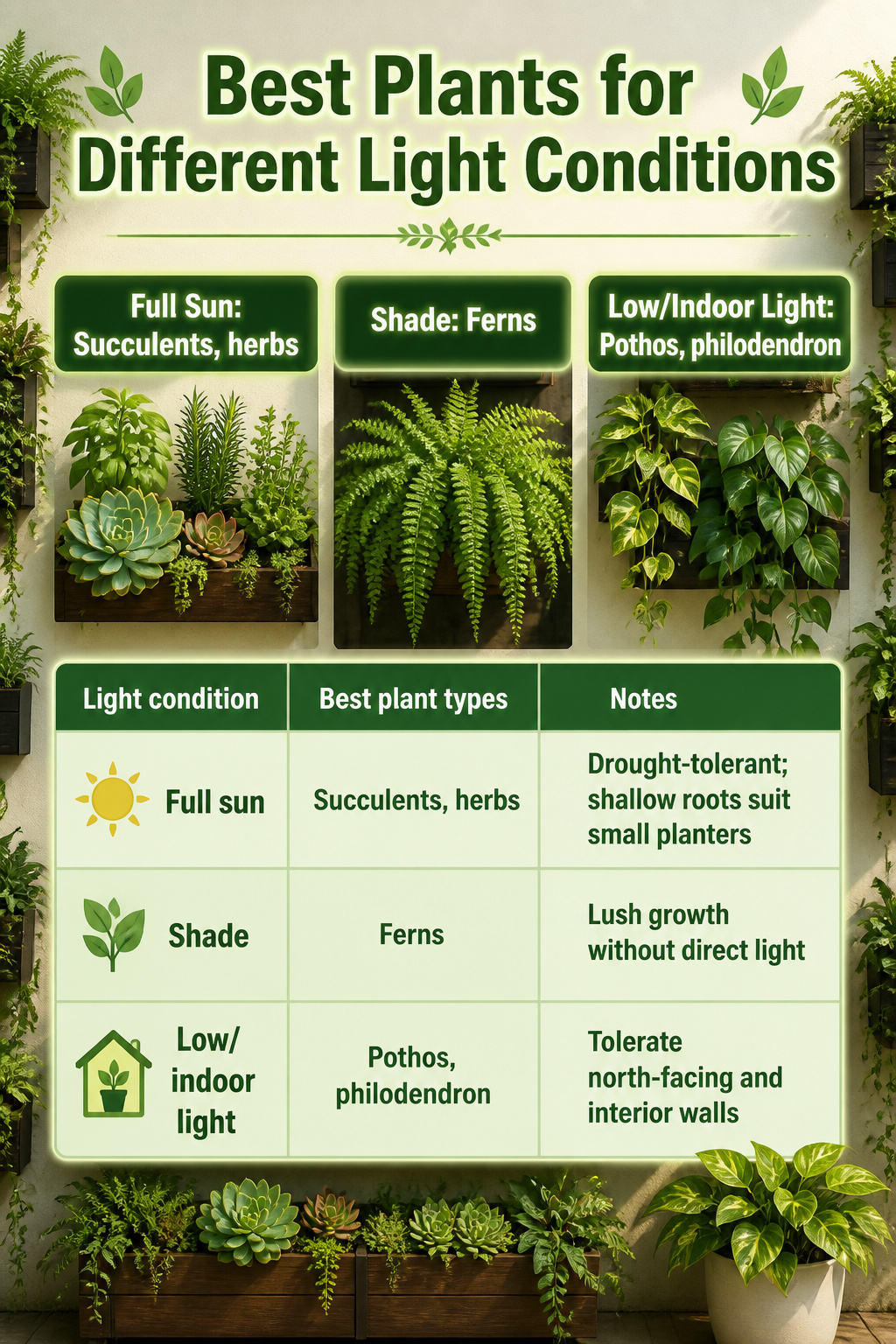
Light on a wall changes faster than light on the ground. A south-facing exterior wall in summer can hold six or more hours of direct sun, while the same wall indoors, filtered through glass, drops to bright indirect at best. North-facing walls stay in shade year-round. That difference decides what lives and what turns into a lesson in replacement costs.
For full-sun walls, succulents and herbs are the reliable choices. Echeverias, sedums, and hens and chicks handle the heat and ask for little water. Basil, rosemary, thyme, and mint stay compact enough for shallow planter boxes and give you something worth cutting. Shade walls want ferns; maidenhair and Boston ferns fill vertical space without demanding sun that is not there. Low-light interiors, including most north-facing walls, do well with pothos or philodendron. Pothos tolerates medium to low indirect light, and philodendron needs even less.
| Light condition | Best plant types | Notes |
|---|---|---|
| Full sun | Succulents, herbs | Drought-tolerant; shallow roots suit small planters |
| Shade | Ferns | Lush growth without direct light |
| Low/indoor light | Pothos, philodendron | Tolerate north-facing and interior walls |
Outdoor walls have a hard limit: your USDA hardiness zone. A succulent wall that thrives in zone 9 dies back in zone 6 unless you treat the planter as annual and replant. Interior walls sidestep that problem entirely, though they trade it for weaker light and drier air.
Drainage and Watering Systems
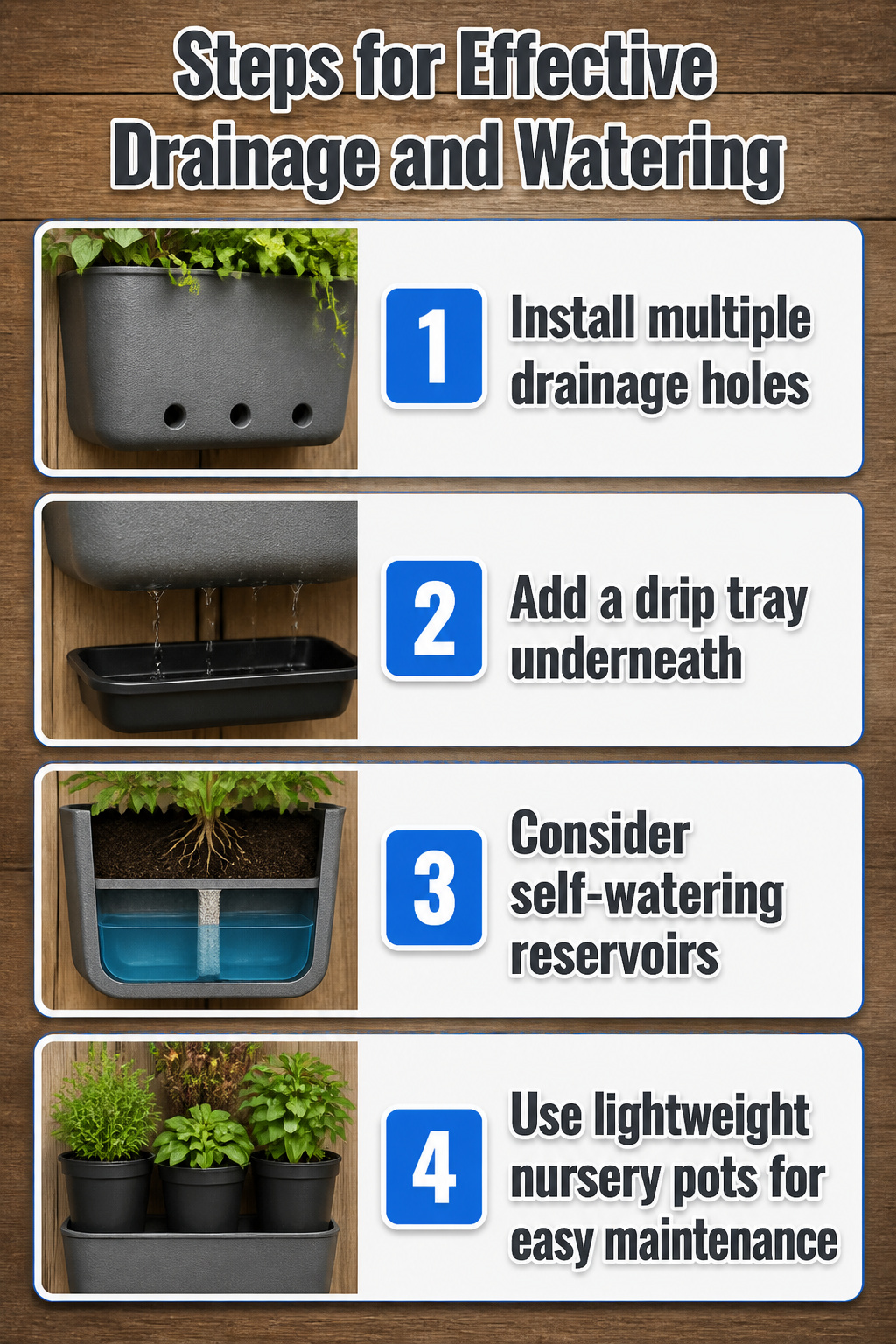
Water trapped against a wall rots roots faster than it rots the wall, though both happen. Multiple drainage holes, not one, are the starting point; a single hole clogs with soil or a root tip and turns the planter into a bathtub. Drip trays beneath catch what escapes, but on a vertical mount they need checking, not trusting. Self-watering reservoirs sound like relief for busy weeks, and some earn it. The ones that work use a separated chamber below the soil line, letting roots draw through a wick or porous wall rather than sitting in standing water. Marketing calls anything with a bottom puddle "self-watering"; what actually matters is whether the root zone stays damp or gets soggy.
Saturated soil weighs roughly double dry soil, a difference that matters when you are mounting on drywall or a balcony rail. Overwatering in a vertical setup shows up as yellow leaves from the bottom first, since water settles downward even in a wall planter, and as a musty smell from the back where air does not circulate. The wall itself tells you too: soft drywall, stained paint, or, indoors, mold along the seam. Protection means either a waterproof backing, plywood with a membrane, or keeping plants in lightweight nursery pots you lift out to water and drain before returning them. That last option skips the reservoir question entirely and leaves the wall dry.
Non-Plant Ideas for Wall Planters
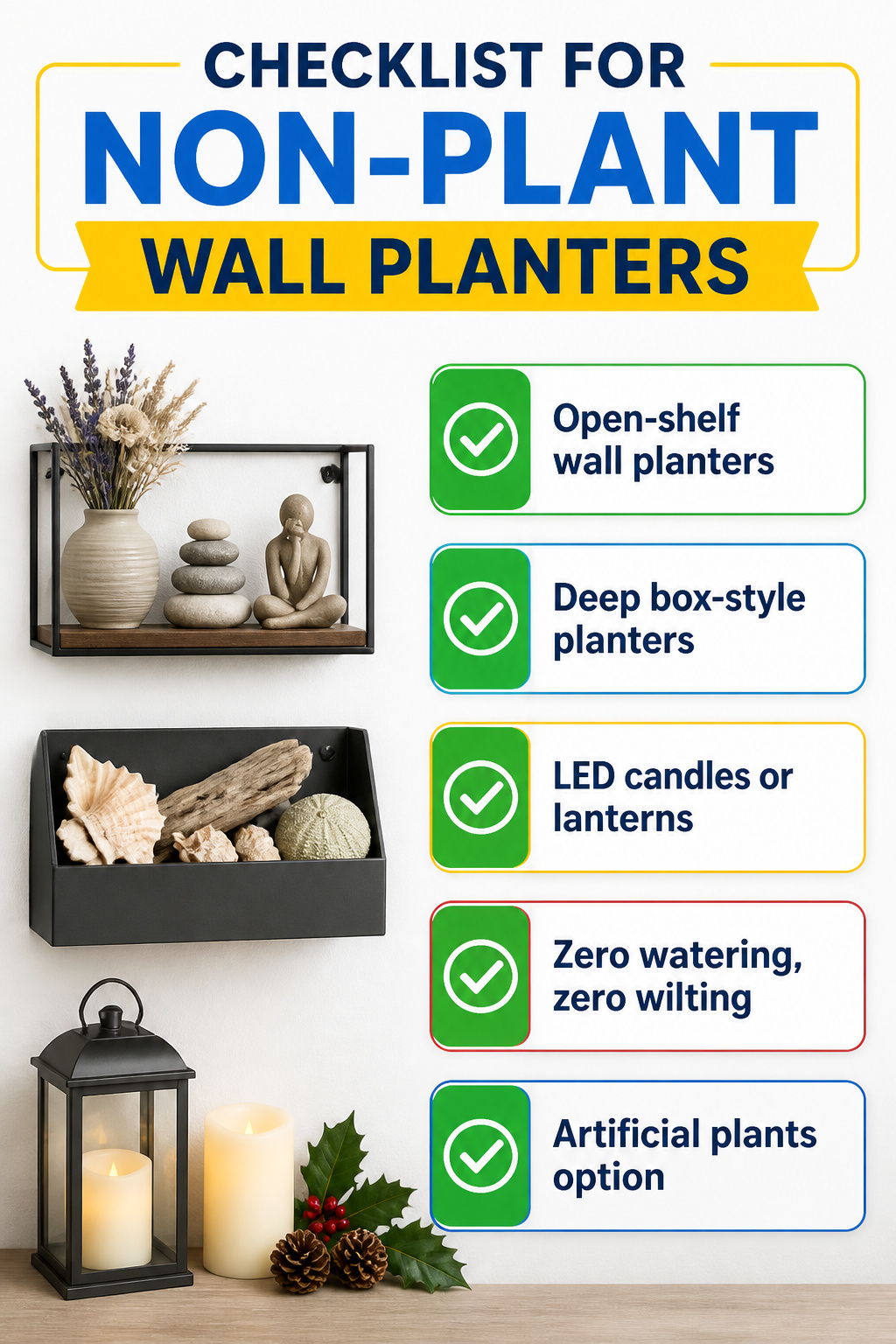
Wall planters do not have to hold living plants to earn their spot. I learned this the hard way after killing three rounds of trailing pothos in a north-facing bathroom, and the pivot to non-living fills turned out to be the lower-maintenance solution I actually needed.
- Open-shelf wall planters suit loose arrangements of decorative stones, dried flowers, or small sculptures best; the lack of a front wall lets light hit the objects and makes swapping them out a thirty-second job.
- Deep box-style planters with solid sides work well for layered displays: beach treasures like seashells and driftwood, or seasonal collections of holly twigs and berries, sit cleanly without spilling.
- LED candles or small lanterns fit either style and give evening ambiance without the fire risk of real flames in a confined wall mount.
- The real advantage here is zero watering, zero wilting, and no soil weight to stress the bracket; for renters or anyone away for weeks at a stretch, the display looks the same on day one and day forty.
- Artificial plants are an option if you still want the suggestion of greenery, though the better ones cost enough that I usually skip straight to the stones or dried material.
Frequently Asked Questions
What plants are best for wall planters?
Succulents, herbs, trailing plants, and ferns work best, but the right choice depends on your wall’s light exposure. Full-sun walls need drought-tolerant plants like echeverias, sedums, and herbs such as basil or rosemary. Shaded walls suit ferns like maidenhair or Boston varieties. Low-light indoor spots handle pothos or philodendron, which tolerate north-facing walls and indirect light. Compact plants with shallow roots generally adapt better to the limited soil volume most wall planters hold.
How do you maintain a wall planter?
Self-watering planters with a bottom reservoir cut daily maintenance by metering water up to roots as needed. They let you stretch time between waterings without stressing the plant. For standard planters, lift pots out to drain in a sink before returning them dry, or use multiple drainage holes so water never pools against the wall. Morning checks matter most in summer, since a small planter can go from damp to dry in under 24 hours of heat.
Can you use artificial plants in wall planters?
Yes, and preserved moss, silk leaves, or quality plastic fillers work well for spots with no light or for caretakers who travel often. Preserved moss lasts longest in dim corners, while silk gives better shape and leaf variety. Mid-grade plastic fades by the second summer of UV exposure, so the small price gap between plastic and silk rarely justifies the replacement cycle. Dust builds static on all artificial foliage, so brush monthly or use a cool hairdryer to keep the wall looking tended rather than neglected.